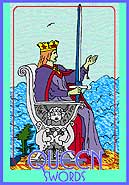
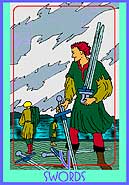
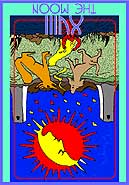
| The Celtic Cross spread is one of the most popular Tarot spreads, providing varied insight into many aspects of a complex situation and your role in it. The Palladini Tarot was created to "bridge the ancient and the future", using elements of Medieval, Egyptian and modern art. It is one of the most popular decks among new students of Tarot. If you would like your own copy of the Palladini Tarot, you can buy it now! |
 | The card not shown but at the center of the cross, represents the atmosphere surrounding the central issue. Queen of Cups, when reversed: The dark essence of water, such as a deep and foreboding lake: Discomfort with the worlds of mind and matter, leading to a retreat to the spiritual. The embrace of negative relationships, driven by the desperate fear of being alone. Devotion to fantasies and daydreams, to the exclusion of practical skills or the pursuit of knowledge. Insecurity leading to dishonor, vice, and undue susceptibility to outside influences. |
 | The card visible at the center of the cross represents the obstacle that stands in your way - it may even be something that sounds good but is not actually to your benefit. Four of Pentacles (Power), when reversed: Using your power freely for your own enjoyment and the betterment of others. Coming to grips with progress and using your position to help it along. Finding security and identity someplace other than in the possession of material things. Letting go and encouraging others to find their own path. Being magnanimous and generous with your success. |
 | The card at the top of the cross represents your goal, or the best you can achieve without a dramatic change of priorities. The Hanged Man: Pausing to reflect. Surrendering to an experience. Adjusting to new ideas through sacrifice. Opening oneself to intuition and enhanced awareness. Letting go of past patterns and growing beyond them. Inner peace, faith, and serenity. |
 | The card at the bottom of the cross represents the foundation on which the situation is based. Three of Cups (Abundance), when reversed: A time of shallow overindulgence, followed depletion. The successful but utterly unfulfilling conclusion of a matter. Satisfaction from sensual pleasures divorced from any sense of love. May indicate problems prematurely dismissed or a victory claimed before it is certain. |
 | The card at the left of the cross represents a passing influence or something to be released. Six of Cups (Pleasure), when reversed: Closing your heart to the simple pleasures of life. Escaping realities by living in the past. Refusal to grow up and embrace the joys of adulthood. Contempt for acts of gentle kindness. May indicate immaturity or sexual insecurities. May indicate the departure of an old friend. |
 | The card at the right of the cross represents an approaching influence or something to be embraced. Five of Rods (Strife): An intense struggle motivated purely by the love of competition. A state of seeming chaos driven by endless small disputes and complications. A hotly contested race, debate, game, or other challenge. A stressful situation that brings out the best in the participants. |
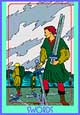
 | The card at the base of the staff represents your role or attitude. Four of Swords (Truce): A time of tranquility and intellectual repose in the midst of a great struggle. A temporary retreat from stress to regather inner strength, reaffirm convictions, reorganize thoughts, and formulate a new plan. The need for vigilance in a moment of calm. May suggest a withdrawal from the material world to find spiritual guidance. |
 | The card second from the bottom of the staff represents your environment and the people you are interacting with. Eight of Cups (Indolence), when reversed: The realization that a matter thought to be important was actually of little consequence. Moving on from something in which you had invested great love and devotion. The start of an inner journey to find higher aspects of life. Reflection on what is truly fulfilling in life. |
 | The card second from the top of the staff represents your hopes, fears, or an unexpected element that will come into play. Four of Cups (Luxury): Being surrounded by love and devotion but taking it for granted. Ignoring the real and longing for the indefinable. Apathy and disengagement from the world. Dissatisfaction with the condition and direction of affairs, but the inability to accept new opportunities. |
 | The card at the top of the staff represents the ultimate outcome should you continue on this course. The Lovers, when reversed: Inner strife, frustration, suspicion, and disagreements in a relationship. Irresponsibility and indecision. Avoiding true intimacy in favor of lust. Unfaithfulness. |