Today's Runes for Charlie Chaplin
| The Fork spread is used at critical turning points, to understand the dynamics of an important decision. Ice Runes are most commonly used for questions about struggle, conflict, and achievement. |
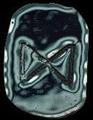
| The left rune represents the first possible outcome. Dagez means daylight, and represents divine light. This rune generally refers to dawn (the initial sparking of energy) or to midday (the climax of energy). Both dawn and midday are symbolic of change, but unlike the changes in the perpetual circle of the year which are slow and subtle, the changes over a day are much faster and more dramatic. The breaking of a new day is symbolic of the rapid illumination of dismal circumstances, and is suggestive of Satori. Be careful - although this rune generally suggests a positive change, the symbology of a peaking point suggests that there must be a change downward as well. Fortunately for some, this rune is cyclic and irreversible, and so permanence is not promised - the only thing you can be sure of is an exciting ride. |
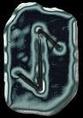
| The right rune represents the second possible outcome. Eoh refers to the Yew tree. The Yew does not go dormant and therefore represents endurance. Even the wood of the tree is strong, resilient, and pliable - the Yew bends, but does not break. The evergreen nature of the Yew is present even in the rune itself, as it cannot be changed even by reversal. This rune is historically symbolic of death, but, as in the Tarot and as suggested by the nature of the Yew tree itself, death is seen only as a transmutation of something eternal and unchanging - the spirit. |
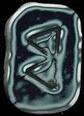
| The bottom rune represents the critical factor that determines what will come to pass. Berkana, the birch tree, is representative of rebirth, fertility, and a positive outcome to ventures undertaken. It is also the rune of families. Here the rune is reversed, warning you to be heedful of new beginnings, lest they sour. Rebirth is either delayed, or totally disrupted. There is also a warning of family troubles. |
|
|