Today's Runes for David Geffen
| The Diamond spread reveals the dynamic forces at work in a situation. It is the spread of choice for understanding a hidden conflict. Gold Runes are most commonly used for questions about business, career, and property. |
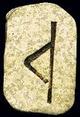
| The bottom rune represents the foundation that forms the basis of the issue. Thurisaz the thorn represents barriers and senseless violence. Here we see the thorn overturned. This could mean that erected barriers will not hold, or that senseless violence can be avoided. Also, remember where thorns are found - perhaps this rune portends that a goal can be obtained easily and without interference. Grasp for the rose... |
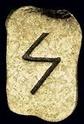
| The left rune represents one of the forces acting on the issue at hand. Sowelu is a strong symbol, for it represents the sun. Unlike equatorial cultures that may see the sun as a harsh and imperial force capable of causing droughts, in the cold north the sun is a purely feminine force that gives life and allows crops to grow. In dark times, this rune represents clarity of sight and the victory of good over evil. Sowelu is irreversible, as the cycles of the sun and seasons are perpetual. |
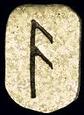
| The right rune represents another of the forces acting on the issue at hand. Ansuz refers to a god or the spoken word of God. It is the voice of reason, law, prophecy and truth. It is the truth heard in the wind. This rune represents wisdom obtained or knowledge delivered. It is the rune of absolute good advice and true council - the message we all must strive to hear. |
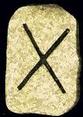
| The top rune represents the conclusion to which your strivings can carry you. Gebo means gift, and like any gifts, the rune may be understood on many levels. Gifts are generally positive things, for both the giver and the recipient. In many cultures however, gifts and favors carry with them an obligation to respond in kind. It is for this reason that gifts, and hence the rune Gebo, are frequently symbolic of friendships, marriages, alliances, mergers, and other bonds between people or organizations. Gebo is a strong rune and the unions represented are strong as well. Moreover, Gebo is not reversible, as true friendships are not easily undone. |
|
|