Today's Runes for Russell Crowe
| The Cross spread is used to plot the arc of your life and the forces acting on it. It is the most popular spread, giving a very complete view of the situation. Stone Runes are most commonly used for questions about the natural world and things beyond human control. |
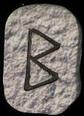
| The left rune represents an important element of the past. Berkana represents the birch tree. The birch is frequently symbolic of renewal, rebirth, birth, growth and fertility. This rune is a joyous one, representing good outcomes from ventures undertaken. It is the rune of the family and of a good household. |
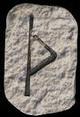
| The middle rune represents a deciding element of the present. Thurisaz represents a thorn, the most basic of barriers to our boon or our bane. In the case of hedges, thorns protect our encampments from that which skulks towards us from the outlands. In the case of rosebushes, thorns keep us from beauty. Though thorns are passive and have no thoughts, they puncture, tear, and may even be poisonous. Hence, this rune may also represent irrational violence and anger. |
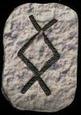
| The top rune represents a force that works for you. Inguz is the rune of completion and fertility. The presence of this rune suggests that tasks which have been initiated will come to fruition. This rune is associated with Ing and Frey, it is this connection that explains its connotations of both fertility and sexuality. The variant of this rune shown here is reminiscent of the twin strands of life, and of the challenge and rewards of bringing together things complimentary. |
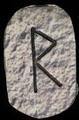
| The bottom Rune represents a force that works against you. Raido means to ride. In this rune, the image is not so much the riding of a horse as in riding in a cart or as cargo. As such Raido may suggest a journey, but is much more indicative of communication. Alternate interpretations based on the use of Raido as a cognate in other words give it the meaning of council, judgment, and moral correctness. Therefore, this rune is the rune of wise advice and good leadership. |
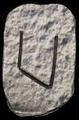
| The right rune represents the critical element of the future, at the core of the final outcome. Uruz is the name of the Auroch, an extinct prehistoric ox. This animal was strong and brave, and was the focus of rites of manhood in older days. Reversed, this rune symbolizes either the lack of challenge, or the lack of preparation for a challenge. This rune suggests that you must reach deep within in order to gain the power you will need, whether to get out of your current rut, or to face what appears to be a hopeless situation. |
|
|