Today's Runes for Sammy Davis Jr.
| The Fork spread is used at critical turning points, to understand the dynamics of an important decision. Jade Runes are most commonly used for questions about love, friendship, and relationships. |
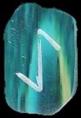
| The left rune represents the first possible outcome. Eoh refers to the Yew tree. The Yew does not go dormant and therefore represents endurance. Even the wood of the tree is strong, resilient, and pliable - the Yew bends, but does not break. The evergreen nature of the Yew is present even in the rune itself, as it cannot be changed even by reversal. This rune is historically symbolic of death, but, as in the Tarot and as suggested by the nature of the Yew tree itself, death is seen only as a transmutation of something eternal and unchanging - the spirit. |
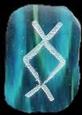
| The right rune represents the second possible outcome. Inguz is the rune of completion and fertility. The presence of this rune suggests that tasks which have been initiated will come to fruition. This rune is associated with Ing and Frey, it is this connection that explains its connotations of both fertility and sexuality. The variant of this rune shown here is reminiscent of the twin strands of life, and of the challenge and rewards of bringing together things complimentary. |
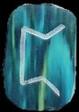
| The bottom rune represents the critical factor that determines what will come to pass. Perth is the rune of chance and gambling. Throw the dice, read your fate. Gaming is a fine way to pass the night...as long as one is careful. Games of chance have outcomes that are hidden from us, and as such Perth represents secrets unknown. Perth symbolizes enjoyment and wild abandon, but be watchful, for Perth is also the rune of mystery and the outcomes unexpected. You cannot lose if you do not play, but neither can you win... |
|
|