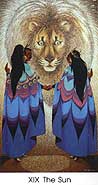
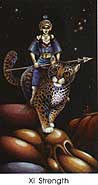
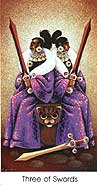
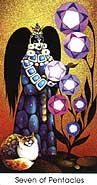
| The Celtic Cross spread is one of the most popular Tarot spreads, providing varied insight into many aspects of a complex situation and your role in it. The Colman Smith Tarot is a modern reinvention of the classic Rider Waite deck, infusing the original line drawings by Pamela Colman Smith with colors drawn from the psychedelic digital age. |
 | The card not shown but at the center of the cross, represents the atmosphere surrounding the central issue. Nine of Swords (Cruelty): Debilitating mental anguish or ill health. Being dragged down by the dishonor of others. Participation in a shameful or regrettable act. Inescapable guilt, mistrust, and doubt. May indicate a death or other catastrophic loss. |
 | The card visible at the center of the cross represents the obstacle that stands in your way - it may even be something that sounds good but is not actually to your benefit. Eight of Swords (Interference): Chagrin at the unforeseen consequences of prior decisions. Criticism, censure, and the imposition of external restrictions. Confusion leading to powerlessness. Inability to focus on the crux of a problem and free oneself from a difficult situation. Being hamstrung by a past failure or humiliation. |
 | The card at the top of the cross represents your goal, or the best you can achieve without a dramatic change of priorities. Page of Pentacles: The essence of earth, such as a mountain: The surprising appearance of new prosperity and opportunities for advance in the physical world. One who delights in the pleasures of the body, material things, and nature. The embrace of hard work, realistic goals, and scholarly perseverance as a means to create solid achievement. Dependability, trust, and a studious nature. May portend a new job or promotion. |
 | The card at the bottom of the cross represents the foundation on which the situation is based. Two of Pentacles (Change): Balance and harmony achieved in a time of upheaval and transformation. Taking two steps forward for every one step back. Shifting the importance of projects and priorities to keep everything on track. A change in occupation or location. |
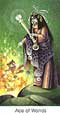
 | The card at the left of the cross represents a passing influence or something to be released. Two of Wands (Dominion), when reversed: The erosion of power and influence. Failing to articulate goals or establish a vision for the future. Being caught off guard, due to an inability to come to grips with the impact of past decisions. Obstinate and irresponsible leadership. Loss of interest, clarity, or faith in a venture. |
 | The card at the right of the cross represents an approaching influence or something to be embraced. Six of Cups (Pleasure), when reversed: Closing your heart to the simple pleasures of life. Escaping realities by living in the past. Refusal to grow up and embrace the joys of adulthood. Contempt for acts of gentle kindness. May indicate immaturity or sexual insecurities. May indicate the departure of an old friend. |
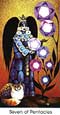
 | The card at the base of the staff represents your role or attitude. Five of Pentacles (Worry), when reversed: Concern over finance leads to prudent action. Impending physical threat is met with calm and skill. Suffering and loneliness leads to spiritual growth. Stress is met without resorting to excess or the pursuit of oblivion. |
 | The card second from the bottom of the staff represents your environment and the people you are interacting with. The World, when reversed: Incompleteness and shoddy design. A great work betrayed. Insecurity, fear of change, and the failure to reach goals. Regret and disappointment. |
 | The card second from the top of the staff represents your hopes, fears, or an unexpected element that will come into play. Wheel of Fortune, when reversed: An unexpected turn of bad luck. A broken sequence of events. Outside influences for the worse. An inescapable descent due to Fate or Karma. Great changes taking place as a result of earlier actions that cannot be taken back. Misfortune, failure and reluctance to use free will. |
 | The card at the top of the staff represents the ultimate outcome should you continue on this course. The Hanged Man, when reversed: Life in suspension. Selfish, materialistic, and untrusting attitudes. Unwillingness to make necessary sacrifices. Going along with the crowd, and refusing to hear the inner voice. Concessions and appeasements that backfire. |