Today's Tarot for George Washington
| The Shadow Truth spread provides insight into your attitudes and hidden feelings. This spread is used when you are having trouble confronting something, or fear that you are concealing something from yourself. The Lovecraft Tarot is a tribute to the gothic writings of the visionary H.P. Lovecraft. It is the deck of choice for explorers of the macabre, and for posing questions that should never be asked. If you would like your own copy of the Lovecraft Tarot, you can buy it now! |
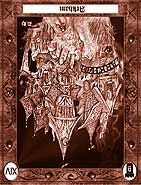 | The card in the center represents the attitude you assume. King of Sites (Arkham), when reversed: The dark essence of earth behaving as air, such as a diamond: An unyielding businessman, with a gift for identifying weakness and exploiting it for personal gain. One well informed about material affairs, but ignorant of larger, more pressing issues. A blind devotee of business as usual, unconcerned with the unintended results, and contemptuous of new ideas. A person full of greed and avarice, easily corrupted by luxury or the temptations of the flesh. |
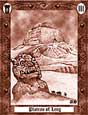
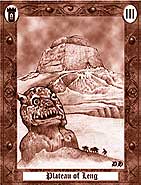 | The card to the right represents the thoughts and feelings that underly your attitudes. Three of Sites (Plateau of Leng): The commencement of business, commercial transactions, or employment. The constructive use of creative talents, and the expression of artistry in workmanship. Skill and labor turned to the crafting of things of value. Using the conventional as a medium for expressing the exceptional, in order to build something of great renown and glory. |
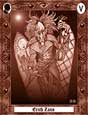
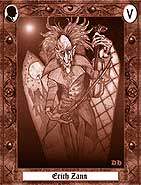 | The card at the top represents how your attitude is evolving and will evolve in the future. Five of Man (Erich Zann): Suffering a loss and wishing for what might have been. Being crippled by sadness, grief, and vain regret. Indecision brought on by the feeling that you made the wrong choice. Ignoring what you still have. May suggest a broken relationship or tragedy. May also suggest a gift, inheritance, opportunity, partnership, or marriage, but one that falls below expectations. |
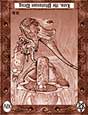
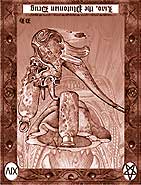 | The card to the left represents how others perceive your attitude. King of Artifacts (Liao, the Plutonian Drug), when reversed: The dark essence of air, such as a gray sky: A mature leader of unyielding ethics and absolute authority. An incorruptible judge, whose devotion to the letter of the law cannot be swayed by emotion, mercy, or exigent circumstances. Perfect clarity of thought, excessive use of force, and mastery of language as a tool for deception. One who, like a great tyrant, inspires not love or devotion, but fear, respect, and obedience. |
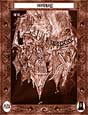
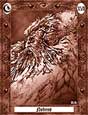
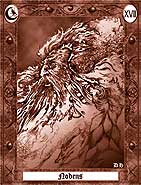 | The card at the bottom represents what you cannot confront or are hiding from yourself. Nodens: New hopes and splendid revelations of the future. Insight, inspiration, courage and enlightenment of the spiritual self. Body and mind and converging towards the light at the end of a dark time. |
|
|