| The Cross and Triangle spread is a powerful means of understanding complex situations, developed by the Hermetic Order of the Golden Dawn. This spread is rich in occult and mystical symbolism, and one of our favorites here at Facade. The Russian Tarot of Saint Petersburg is the final commissioned work of Yuri Shakov, a master in the lost art of Russian miniature painting. The rich, dark images lend themselves to questions regarding the struggle of the human spirit in trying times. If you would like your own copy of the Russian Tarot of Saint Petersburg, you can buy it now! |
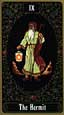
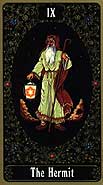 | The first card, the significator, is placed in the center of the cross. This card represents the prime energy manifest in your life. The Hermit: Counsel. Knowledge. Solicitude. Prudence. Discretion. Vigilance. Circumspection. Self-denial. Withdrawal. Regression. Annulment. Tendency to withhold emotion. Fear of discovery. |
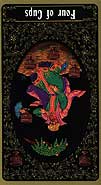 | The second card, placed above the significator, represents Air. It describes your spirit, process of thought, and the influence of reason. Four of Cups (Luxury), when reversed: New possibilities. New relationships. New approaches to old problems. New knowledge. |
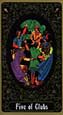
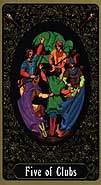 | The third card, placed to the right of the significator, represents Fire. It describes your motivations, creative energies, and the influence of passion. Five of Clubs (Strife): Unsatisfied desires. Struggle. Labor. Violent strife. Obstacles. |
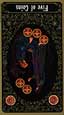
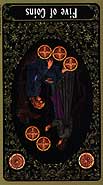 | The fourth card, placed below the significator, represents Water. It describes your emotions, meditations, and the influence of love. Five of Coins (Worry), when reversed: Reversal of bad trend. New interest in matters. Opposition to further gain. Suspense and delay. Spendthrift. |
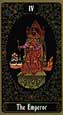
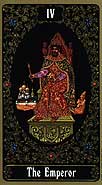 | The fifth card, placed to the left of the significator represents Earth. It describes your physical presence, position in life, and the influence of the material world. The Emperor: Worldly power. Confidence. Wealth. Stability. Authority. Indomitable spirit. War-making tendencies. Father. Brother. Husband. Male influence. Domination of intelligence and reason over emotion and passion. Patriarchal figure. |
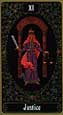
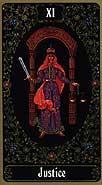 | At this point the cross is complete and the triangle is formed. The sixth card, placed on the bottom left of the triangle represents one of two opposing forces. Justice: Reasonableness. Justice Proper balance. Harmony. Equity. Righteousness. Virtue. Honor. Virginity. Just reward. The eventual outcome, whether favorable or unfavorable, will be truly fair to the person concerned. Equilibrium. Poise. Impartiality. |
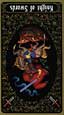
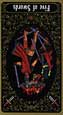
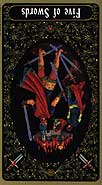 | The seventh card, placed on the bottom right of the triangle represents the force that opposes the bottom left card. These forces may be external, but they are frequently one's own inner archetypes in conflict. Five of Swords (Defeat), when reversed: Uncertain outlook. Chance of loss or defeat. Weakness. Possible misfortune misfalling a friend. Seduction. Burial. |
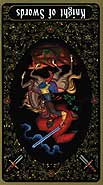 | The eighth card, the reconciler, is placed below the cross in the third vertex of the triangle. This is the force that will resolve the conflict between the bottom left and bottom right cards. By meditating on this force and bringing more of it into your life, you can bring the matter at hand to a swifter conclusion than would naturally occur. Knight of Swords, when reversed: Incapacity. Imprudence. Dispute or ruin over a woman. Impulsive mistakes. Conceited fool. Simplicity. |
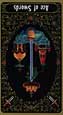
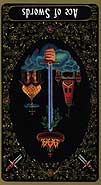 | The ninth and final card, placed in the center bottom of the triangle, represents the final outcome unless you change course. Ace of Swords, when reversed: Debacle. Tyranny. Disaster. Self-destruction. Violent temper. Embarrassment. Obstacle. Infertility. |