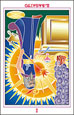
Today's Tarot for Margaret Thatcher
| The Fourfold Vision spread offers a progression of different ways of looking at an object, person, or situation. It is a powerful tool for gaining deeper insight into the specific subjects of other readings. The Phoenix Tarot is one of the most strikingly beautiful decks of the 20th century. Through vibrant colors and stylized images, it breathes new life into the familiar symbology of the Tarot. If you would like your own copy of the Phoenix Tarot, you can buy it now! |
 | The card on the far right represents the object being viewed, be it an idea, relationship, or the self. The Magician, when reversed: Trickery, demagoguery, and artful deceptions. The use of knowledge and skill for selfish gain or destructive purposes. The abuse of technology. Incompetence and uncertainty. A lack of will power. A fatal flaw in a great work. |
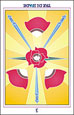
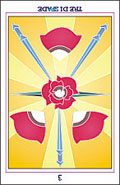 | The card second from the right represents the physical vision: how the object is seen at a base or mechanical level. Three of Swords (Sorrow), when reversed: Unsettling news that helps you to distance yourself from a destructive relationship. Painfully honest communication that needs to take place. Not letting yourself be dragged by your emotions into a negative situation. A trust or confidence betrayed in an attempt to help someone in need. The revelation of a painful truth. |
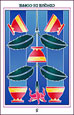
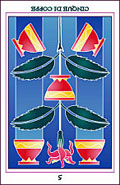 | The card in the middle represents the mental vision: the object personified and seen through a humanized perspective. Five of Cups (Disappointment), when reversed: Accepting a loss. Overcoming sadness and grief to get on with your life. Realizing the value of what you still have. Dissatisfaction gives way to a new hope and understanding. May allude to a broken relationship or tragedy. May also refer to a gift, inheritance, opportunity, partnership, or marriage that has fallen below expectations. |
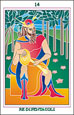
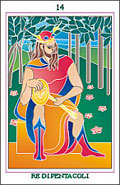 | The card second from the left represents the emotional vision: how passions and values are creatively stimulated by the mental vision. King of Pentacles: The essence of earth behaving as air, such as a diamond: A true businessman, with a gift for identifying opportunities and taking advantage of them. A person well informed about the world, skilled in all things physical, and eager to encourage others. A pillar of practicality and dependability, embracing tried and tested methods, and possessing an innate understanding of the material reality. A philanthropist and devotee of both luxury and hard work, whose word is as good as gold. |
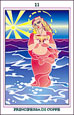
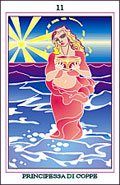 | The card on the far left represents the fourfold or mystical vision: still viewing through the previous three, we now add a spiritual element, revealing unseen aspects of the object. Page of Cups: The essence of water behaving as earth, such as a wellspring: An unexpected new relationship that is playful and spontaneous. A romantic soul who embraces compassion and imagination with childlike joy. Gentle reflections on love, spirituality, and the importance of personal relationships in business and material affairs. May herald the birth of a child. |
|
|