Today's Tarot for T. E. Lawrence
| The Celtic Cross spread is one of the most popular Tarot spreads, providing varied insight into many aspects of a complex situation and your role in it. The Lovecraft Tarot is a tribute to the gothic writings of the visionary H.P. Lovecraft. It is the deck of choice for explorers of the macabre, and for posing questions that should never be asked. If you would like your own copy of the Lovecraft Tarot, you can buy it now! |
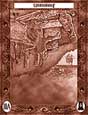
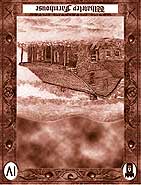 | The card not shown but at the center of the cross, represents the atmosphere surrounding the central issue. Four of Sites (Whateley Farmhouse), when reversed: Using your power freely for your own enjoyment and the betterment of others. Coming to grips with progress and using your position to help it along. Finding security and identity someplace other than in the possession of material things. Letting go and encouraging others to find their own path. Being magnanimous and generous with your success. |
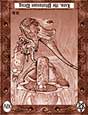
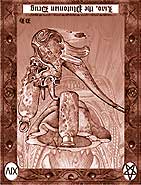 | The card visible at the center of the cross represents the obstacle that stands in your way - it may even be something that sounds good but is not actually to your benefit. King of Artifacts (Liao, the Plutonian Drug), when reversed: The dark essence of air, such as a gray sky: A mature leader of unyielding ethics and absolute authority. An incorruptible judge, whose devotion to the letter of the law cannot be swayed by emotion, mercy, or exigent circumstances. Perfect clarity of thought, excessive use of force, and mastery of language as a tool for deception. One who, like a great tyrant, inspires not love or devotion, but fear, respect, and obedience. |
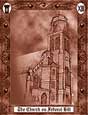
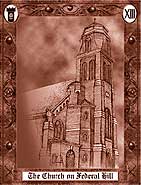 | The card at the top of the cross represents your goal, or the best you can achieve without a dramatic change of priorities. Queen of Sites (The Church on Federal Hill): The essence of earth behaving as water, such as a hot spring: A warm and generous host, providing shelter and comfort for all who would seek it. A person steadfast, practical, and domestic, able to create opulence and stability in any setting. The qualities of maturity and sensibility, coupled with an innate appreciation for nature and the material world. |
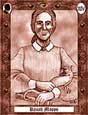
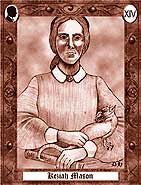 | The card at the bottom of the cross represents the foundation on which the situation is based. King of Man (Keziah Mason): The essence of water behaving as air, such as a billowing cloud in the blue sky: Great maturity, endless patience, tolerance of other points of view, and a deep knowledge of human nature. One who intuitively knows the strengths of those around him, and gently cultivates them. Remaining calm and relaxed in all situations, and making artful use of diplomacy or a quiet word to resolve conflicts. The ability to listen to what another person is saying, and truly understand what is in their heart. A rewarding partner and a beloved leader. |
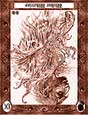
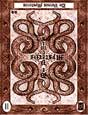
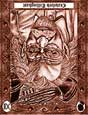
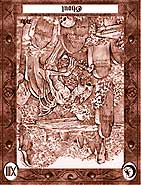 | The card at the left of the cross represents a passing influence or something to be released. Ghoul, when reversed: Stagnation or petrifaction. The refusal to let go of the past. Resistance to change because of fear. |
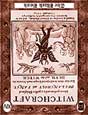
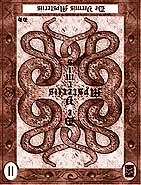 | The card at the right of the cross represents an approaching influence or something to be embraced. Two of Tomes (De Vermis Mysteriis), when reversed: The erosion of power and influence. Failing to articulate goals or establish a vision for the future. Being caught off guard, due to an inability to come to grips with the impact of past decisions. Obstinate and irresponsible leadership. Loss of interest, clarity, or faith in a venture. |
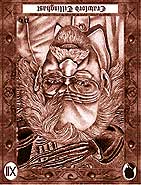 | The card at the base of the staff represents your role or attitude. Knight of Man (Crawford Tillinghast), when reversed: The dark essence of water behaving as fire, such as a flash flood: Deceptive charm in the service of intense insecurity and rapidly shifting moods. Selfishness, indolence, and a complete lack of maturity. Misguided idealism divorced from practicality. Destructive romantic passions and infidelity. |
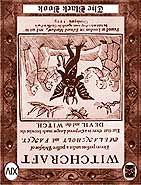 | The card second from the bottom of the staff represents your environment and the people you are interacting with. King of Tomes (The Black Book), when reversed: The dark essence of fire behaving as air, such as lightning: An exciting and reckless leader who inspires others to irresponsible acts. An artist whose depraved love of chaos causes him to take hold of destructive ideas and make them appealing to the masses. One who is charismatic and intimidating, using demonstrations of his own skill to dupe others into accepting responsibilities beyond their ability. A dashing and magnetic personality, appearing and disappearing with great suddenness, and leaving upheaval in his wake. |
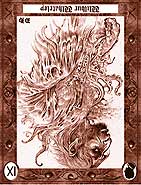 | The card second from the top of the staff represents your hopes, fears, or an unexpected element that will come into play. Nine of Man (Wilbur Whateley), when reversed: Vanity, conceit, and smugness in romance, friendship, or other relationships. Achieving what you always thought you wanted. Overindulging in food, drink, or the pleasures of the flesh. A state of joy and abundance that is shallow and fleeting. |
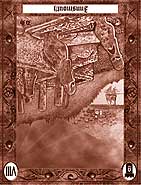 | The card at the top of the staff represents the ultimate outcome should you continue on this course. Eight of Sites (Innsmouth), when reversed: Undue attention to small details at the expense of the big picture. Losing yourself in your work, to the detriment of your personal and spiritual life. Making the same mistake repeatedly. Refusing to learn new crafts or skills. |
|
|