Today's Tarot for Werner Heisenberg
| The Two Paths spread provides insight into an important decision ahead of you, the possible outcomes, and the forces that draw you towards each of these outcomes. The Voodoo Tarot of New Orleans is a deck rich in primal spirituality. It draws on images from the religion Santeria, which weaves Catholic and African beliefs into a vibrant tapestry. This exceptional deck is most often used to ask questions regarding the joy, fury, and spirituality in everyday life. If you would like your own copy of the Voodoo Tarot of New Orleans, you can buy it now! |
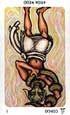
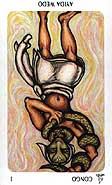 | The top left card represents the first possible outcome. Ayida Wedo (Ace of Cups), when reversed: The seed of a destructive relationship or spiritual collapse. A missed opportunity for joy, contentment, fertility, or enlightenment. Failing to understand the emotional needs of those around you. May represent an unexpected message, a chance meeting, or the start of a friendship or romance. |
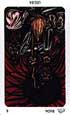
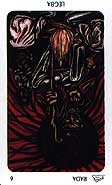 | The top right card represents the second possible outcome. Legba (Six of Swords), when reversed: Conceit and intellectual pride. Being stuck in a problem which has no apparent solution. Frustration and anxiety that are left unsettled. Travel and exploration are delayed. |
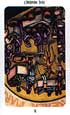
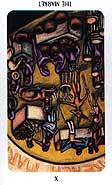 | The middle left card represents the force drawing you towards the first possible outcome. The Market (The Wheel), when reversed: An unexpected turn of bad luck. A broken sequence of events. Outside influences for the worse. An inescapable descent due to Fate or Karma. Great changes taking place as a result of earlier actions that cannot be taken back. Misfortune, failure and reluctance to use free will. |
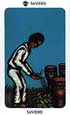
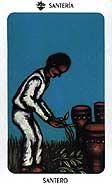 | The middle right card represents the force drawing you towards the second possible outcome. Santero (King of Discs): The essence of earth behaving as air, such as a diamond: A true businessman, with a gift for identifying opportunities and taking advantage of them. A person well informed about the world, skilled in all things physical, and eager to encourage others. A pillar of practicality and dependability, embracing tried and tested methods, and possessing an innate understanding of the material reality. A philanthropist and devotee of both luxury and hard work, whose word is as good as gold. |
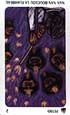
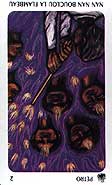 | The bottom card represents the critical factor that decides what will come to pass. Nan Nan Bouclou La Flambeau (Two of Wands), when reversed: The erosion of power and influence. Failing to articulate goals or establish a vision for the future. Being caught off guard, due to an inability to come to grips with the impact of past decisions. Obstinate and irresponsible leadership. Loss of interest, clarity, or faith in a venture. |
|
|