| The Celtic Cross spread is one of the most popular Tarot spreads, providing varied insight into many aspects of a complex situation and your role in it. The Colman Smith Tarot is a modern reinvention of the classic Rider Waite deck, infusing the original line drawings by Pamela Colman Smith with colors drawn from the psychedelic digital age. |
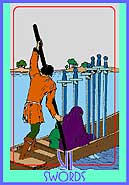 | The card not shown but at the center of the cross, represents the atmosphere surrounding the central issue. Six of Swords (Science): Trusting in intelligence and intuition and setting off into the unknown. Leaving an untenable situation and charting a new course. Passage from difficulty and progress towards a solution. The road to recovery. Travel and exploration. |
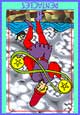
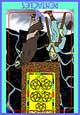
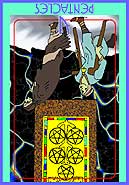 | The card visible at the center of the cross represents the obstacle that stands in your way - it may even be something that sounds good but is not actually to your benefit. Five of Pentacles (Worry), when reversed: Concern over finance leads to prudent action. Impending physical threat is met with calm and skill. Suffering and loneliness leads to spiritual growth. Stress is met without resorting to excess or the pursuit of oblivion. |
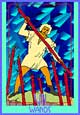
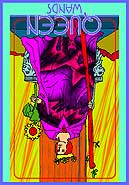 | The card at the top of the cross represents your goal, or the best you can achieve without a dramatic change of priorities. Queen of Wands, when reversed: The dark essence of fire behaving as water, such as steam: The natural embodiment of passion and sensuality, who will do anything to the be the center of attention. A seducer who calculatingly dons the guise of what others desire. A cocky and domineering person, who pushes anyone or anything aside to get what she wants. One who is vengeful and quick to take offense without good cause. May indicate infidelity and contempt for a relationship. |
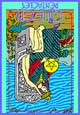
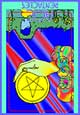
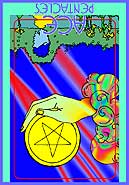 | The card at the bottom of the cross represents the foundation on which the situation is based. Ace of Pentacles, when reversed: The seed of luxury, debauchery, and physical gratification. The seductions of the material world draw you away from an opportunity for stability and comfort. The need to focus on the practical and understand the dynamics of your environment. May represent a gift, document, inheritance, or physical event. |
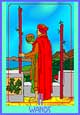
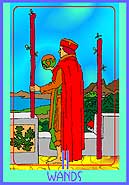 | The card at the left of the cross represents a passing influence or something to be released. Two of Wands (Dominion): Established power and influence over others. Setting goals and a vision for the future. Coming to grips with the impact of past decisions, considering the current state of affairs, and developing a plan of action. Responsible leadership. |
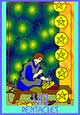
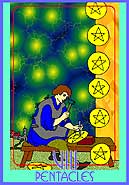 | The card at the right of the cross represents an approaching influence or something to be embraced. Eight of Pentacles (Prudence): Dedicating yourself fully to a task. Learning a new craft or skill. Applying painstaking attention to detail. Industriousness and the efficient completion of tasks. Sticking with a project long enough to see it through. |
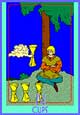
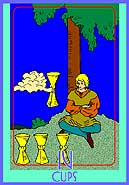 | The card at the base of the staff represents your role or attitude. Four of Cups (Luxury): Being surrounded by love and devotion but taking it for granted. Ignoring the real and longing for the indefinable. Apathy and disengagement from the world. Dissatisfaction with the condition and direction of affairs, but the inability to accept new opportunities. |
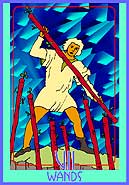 | The card second from the bottom of the staff represents your environment and the people you are interacting with. Seven of Wands (Valor): Standing courageously for your beliefs in the face of adversity. Fear of failure overcome by the will to succeed. Great obstacles met with heroism and determination. Inner strength brought to bear at a critical moment. |
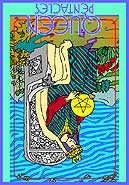 | The card second from the top of the staff represents your hopes, fears, or an unexpected element that will come into play. Queen of Pentacles, when reversed: The dark essence of earth behaving as water, such as ice: A cold but generous host, driven by an overwhelming need for to accumulate and maintain opulence. A person so preoccupied with wealth and security that they can never stop to enjoy either. One who reflects the weaknesses of others, breeding suspicion and mistrust. |
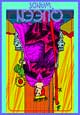
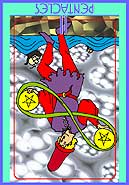 | The card at the top of the staff represents the ultimate outcome should you continue on this course. Two of Pentacles (Change), when reversed: Imbalance and disharmony as a result of upheaval and transformation. Taking one step forward for every two steps back. Chaos caused by the shifting importance of projects and priorities. Industrious yet unreliable actions. Furious activity producing negligible results. |