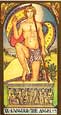
| The Twisting Path spread provides insight into the path ahead of you and the choices you must make. This is the spread for situations where more than one pitfall may lie ahead. The Renaissance Tarot is a modern deck, with symbolism drawn from the heroic age and rendered in renaissance style. This deck is an excellent choice for exploring questions of passion, mastery, and the inner workings of human reason. If you would like your own copy of the Renaissance Tarot, you can buy it now! |
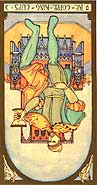 | The card at the lower left, represents the first decision along your path. King of Cups, when reversed: An ineffectual, unsteady person, talented but emotionally at sea. |
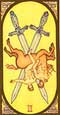
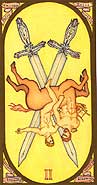 | The card to the far left represents the first false path that may lead you astray. Two of Swords (Peace), when reversed: False friendship. Misunderstanding or duplicity, particularly between mentor and student. |
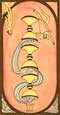
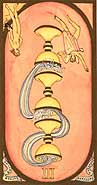 | The card in the middle represents the second decision along your path. Three of Cups (Abundance), when reversed: Superficial pleasure. Excessive emotion. |
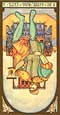
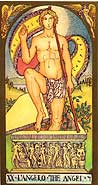 | The card at the lower right represents the second false path that may lead you astray. The Judgment: Resurrection and rebirth. Perfection of the body and soul. Final reward or punishment. |
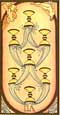
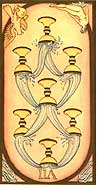 | The card at the top represents one possible mask of your true destination. Seven of Cups (Temptation), when reversed: Determination and resolve. Independent resolution to move ahead with eyes open. |