Today's Tarot for Colin Powell
| The Cross and Triangle spread is a powerful means of understanding complex situations, developed by the Hermetic Order of the Golden Dawn. This spread is rich in occult and mystical symbolism, and one of our favorites here at Facade. The Palladini Tarot was created to "bridge the ancient and the future", using elements of Medieval, Egyptian and modern art. It is one of the most popular decks among new students of Tarot. If you would like your own copy of the Palladini Tarot, you can buy it now! |
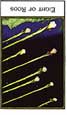
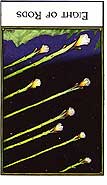 | The first card, the significator, is placed in the center of the cross. This card represents the prime energy manifest in your life. Eight of Rods (Swiftness), when reversed: Too much force applied too suddenly. A flash in the pan. A foolhardy and untimely plunge into the unknown. Impatience leading to poor decisions in love, business, travel, or spiritual growth. |
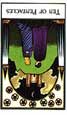
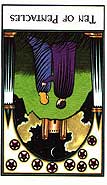 | The second card, placed above the significator, represents Air. It describes your spirit, process of thought, and the influence of reason. Ten of Pentacles (Wealth), when reversed: Material prosperity and riches squandered through slothfulness, gambling, or family problems. The loss of reputation or inheritance, or the failure to pass an inheritance along to one's children. |
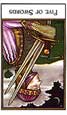
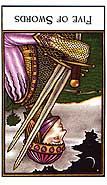 | The third card, placed to the right of the significator, represents Fire. It describes your motivations, creative energies, and the influence of passion. Five of Swords (Defeat), when reversed: Refusing to achieve success through personal degradation. Friendship maintained through the abandonment of a dishonorable gain. Slander and infamy avoided. |
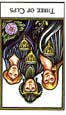
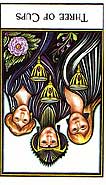 | The fourth card, placed below the significator, represents Water. It describes your emotions, meditations, and the influence of love. Three of Cups (Abundance), when reversed: A time of shallow overindulgence, followed depletion. The successful but utterly unfulfilling conclusion of a matter. Satisfaction from sensual pleasures divorced from any sense of love. May indicate problems prematurely dismissed or a victory claimed before it is certain. |
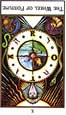
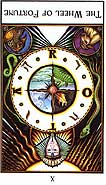 | The fifth card, placed to the left of the significator represents Earth. It describes your physical presence, position in life, and the influence of the material world. Wheel of Fortune, when reversed: An unexpected turn of bad luck. A broken sequence of events. Outside influences for the worse. An inescapable descent due to Fate or Karma. Great changes taking place as a result of earlier actions that cannot be taken back. Misfortune, failure and reluctance to use free will. |
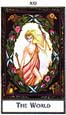
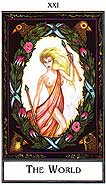 | At this point the cross is complete and the triangle is formed. The sixth card, placed on the bottom left of the triangle represents one of two opposing forces. The World: Completeness and intricacy of design. A great work. Achievement, reward, and well-earned recognition. A time of success, prosperity, security and joy. May also indicate travel or a change in residence. |
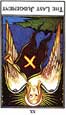
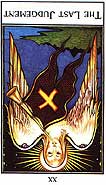 | The seventh card, placed on the bottom right of the triangle represents the force that opposes the bottom left card. These forces may be external, but they are frequently one's own inner archetypes in conflict. The Judgment, when reversed: Procrastination and indecision. Disillusionment and the inability bring a matter to conclusion. |
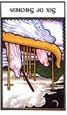
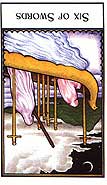 | The eighth card, the reconciler, is placed below the cross in the third vertex of the triangle. This is the force that will resolve the conflict between the bottom left and bottom right cards. By meditating on this force and bringing more of it into your life, you can bring the matter at hand to a swifter conclusion than would naturally occur. Six of Swords (Science), when reversed: Conceit and intellectual pride. Being stuck in a problem which has no apparent solution. Frustration and anxiety that are left unsettled. Travel and exploration are delayed. |
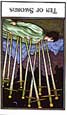
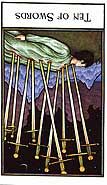 | The ninth and final card, placed in the center bottom of the triangle, represents the final outcome unless you change course. Ten of Swords (Ruin), when reversed: The darkness before the dawn. An end to suffering, leading to spiritual transformation. A crushing and seemingly total defeat that hides within it the seeds of final victory. Ultimate knowledge gained through ultimate sacrifice. |
|
|