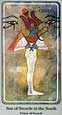
| The Shadow Truth spread provides insight into your attitudes and hidden feelings. This spread is used when you are having trouble confronting something, or fear that you are concealing something from yourself. The Haindl Tarot weaves a tapestry of haunting beauty from the traditions of Native America, the Holy Grail, the I Ching, Kabbalah and the Norse Runes, and is the deck of choice for mystics and those seeking enlightenment. If you would like your own copy of the Haindl Tarot, you can buy it now! |
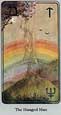
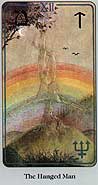 | The card in the center represents the attitude you assume. The Hanged Man: Attachment. Deep spiritual awareness. Independence. |
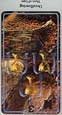
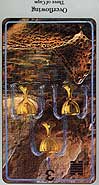 | The card to the right represents the thoughts and feelings that underly your attitudes. Three of Cups (Overflowing), when reversed: Feelings dammed up. Instability. |
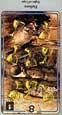
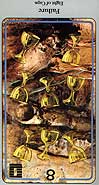 | The card at the top represents how your attitude is evolving and will evolve in the future. Eight of Cups (Failure), when reversed: Hidden joy. New happiness. Positive change. |
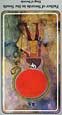
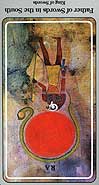 | The card to the left represents how others perceive your attitude. Father of Swords (Ra), when reversed: Tyrant. A person jealous of personal power. |
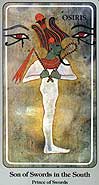 | The card at the bottom represents what you cannot confront or are hiding from yourself. Son of Swords (Osiris): Someone gentle, yet persuasive. An initiate to esoteric mysteries. Kindness. |