| The Celtic Cross spread is one of the most popular Tarot spreads, providing varied insight into many aspects of a complex situation and your role in it. The William Blake Tarot explores the mystical vision and artistry of the renowned English painter and poet. Through rich interpretations focused on creative undertakings, it has long been the deck of choice for artists, writers, musicians, and thinkers. For more information about this deck, or to buy your own personal copy, go to www.blaketarot.com.
|
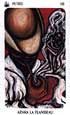
 | The card not shown but at the center of the cross, represents the atmosphere surrounding the central issue. Four of Painting (Means), when reversed: Obsession with material prosperity and contentment. Attachment to money and material goods. Creative achievements blocked by lack of material resources. Consolidation of personnel and materials at the expense of the objective at hand. Overwhelming need for order and structure. Emphasis on controlling, dominating, or monopolizing. In the creative process: Before reaching out for creative inspiration, prepare the groundwork: by appropriately allocating your resources and assigning creative tasks. |
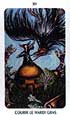
 | The card visible at the center of the cross represents the obstacle that stands in your way - it may even be something that sounds good but is not actually to your benefit. Angel of Painting: "The Graphic Muse". Visionary reverie. Coalescing plans and agendas in your imagination. Contemplation prior to action. Making use of appropriate tools. Getting an overview of the situation, particularly regarding its physical or material aspects. "Getting the feel" of things. In the creative process: Look for or contemplate a solid idea, a practical point of view that can instigate a whole new direction in your work or project. |
 | The card at the top of the cross represents your goal, or the best you can achieve without a dramatic change of priorities. Five of Science (Division), when reversed: Meeting an overwhelming problem by focusing on its' component parts. Cutting yourself loose from mental hang-ups and personal entanglements. The ability to keep things separate in your mind, and to avoid conflict of interest. Swift action when faced with an impossible choice. Possibility for a new outlook. In the creative process: Caught in your own net of plans or scheme. Divide the problem into smaller segments for greater freedom of action. |
 | The card at the bottom of the cross represents the foundation on which the situation is based. Nine of Painting (Fruition), when reversed: A task completed but rewards denied. A peak experience from which the only way is down. Physical bliss and orgasm denied. Achievements that seem to slip through your fingers. Reaching a disappointing physical peak. In the creative process: You gain by combining separate elements into an integrated whole; making the right use of what is available in order to achieve your goals. |
 | The card at the left of the cross represents a passing influence or something to be released. Child of Poetry: "I found them blind: I taught them how to see". Feelings of creative restlessness and artistic impulses. Sparks are flying. Learning through experience. Taking risks. Bending over backwards in your effort to see the appropriate direction for self-development and creativity. Looking for inspirational influences in your environment. In the creative process: An inspirational breakthrough is at your feet; it is up to your to pick up the energy and make the most of it. |
 | The card at the right of the cross represents an approaching influence or something to be embraced. Man of Music, when reversed: Repression of emotions. Discipline and mastery turned to denial. Feeling the pressure to remain on top. Making unreasonable attempts to sway others through fluency in the language of the unconscious. Reliance on dreams, oracles, and omens above the direct evidence of the senses and reason. Overestimation of ones own abilities. In the creative process: Dedicate your considerable powers to help others and for creating beauty in the world. |
 | The card at the base of the staff represents your role or attitude. Eight of Poetry (Swiftness): "Time is the mercy of Eternity: / without Time's swiftness Which is the swiftest of all things: / all were eternal torment". Vigorous and imaginative assertion is strongly indicated. Experiencing the relativity of time. The speeding-up of events or gathering of energy. Falling in love, or being swept off your feet. Everything is up in the air or in process. Flux. Rapid communications across time and space. The Internet. Look for coincidences and serendipity at work. In the creative process: Transcend all illusions of time and space by using your imagination, which can take you anywhere at any time. |
 | The card second from the bottom of the staff represents your environment and the people you are interacting with. Error: Seeking ego-gratification through manipulation or duplicity. Self-importance. Lacking a sense of humor. Being controlled by your lower nature or personal shadow. Fears engendered by ignorance. Feeling pressured by materialistic, institutional, or corporate agents. Negative obsessions. Blind adulation. Sexual or material bondage. Giving in to temptation, guilt, or panic. |
 | The card second from the top of the staff represents your hopes, fears, or an unexpected element that will come into play. Magic: Asserting control over the situation. Ability to channel or direct powerful forces. Making the most of the available resources. Outstanding possibilities for communication. The right time to act is at hand. Naked aggressiveness is effective at this time. Availability of tools and skills. |
 | The card at the top of the staff represents the ultimate outcome should you continue on this course. Five of Music (Melancholy): "Whatever is Born of Mortal Birth / Must be consumed with the Earth / To rise from Generation free: / Then what have I to do with thee?". Emotional disappointment. Existential angst. Spiritual insights following a sad event. Separating and moving on. Sadness, loss, grieving. Acknowledging your mistakes. Releasing ties and attachments from the past. In the creative process: Convert the pain of disappointment or loss into artistic expression. Let go of something old or dead and move on to something new and alive. |