Today's Tarot for Mel Gibson
| The Shadow Truth spread provides insight into your attitudes and hidden feelings. This spread is used when you are having trouble confronting something, or fear that you are concealing something from yourself. The Aquatic Tarot is a modern watercolor interpretation of the classic Rider Waite symbolism. It is rapidly becoming one of the most popular decks, due to both its spectacular beauty and its traditional imagery. |
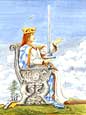
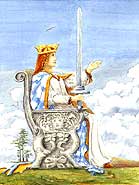 | The card in the center represents the attitude you assume. Queen of Swords: The essence of air behaving as water, such as a refreshing mist: A person gifted with both keen logic and natural intuition, giving them uncanny powers of perception and insight. One who easily sees past deception and confusion to the heart of a matter, and understands both sides of any argument. The embodiment of calm, forthrightness, and wit, in the face of even the most trying circumstances. |
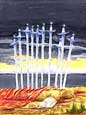
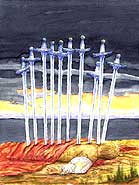 | The card to the right represents the thoughts and feelings that underly your attitudes. Ten of Swords (Ruin): Crushing defeat brought about by idle intellectualism divorced from reality. Sadness and desolation in the aftermath of a catastrophic and total collapse. A decisive conclusion brought about through the swift and merciless application of overwhelming force. |
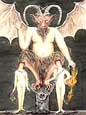
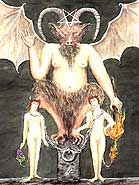 | The card at the top represents how your attitude is evolving and will evolve in the future. The Devil: Being seduced by the material world and physical pleasures. Lust for and obsession with money and power. Living in fear, domination and bondage. Being caged by an overabundance of luxury. Discretion should be used in personal and business matters. |
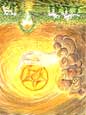
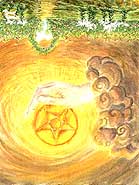 | The card to the left represents how others perceive your attitude. Ace of Pentacles, when reversed: The seed of luxury, debauchery, and physical gratification. The seductions of the material world draw you away from an opportunity for stability and comfort. The need to focus on the practical and understand the dynamics of your environment. May represent a gift, document, inheritance, or physical event. |
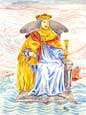
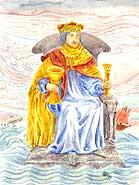 | The card at the bottom represents what you cannot confront or are hiding from yourself. King of Cups: The essence of water behaving as air, such as a billowing cloud in the blue sky: Great maturity, endless patience, tolerance of other points of view, and a deep knowledge of human nature. One who intuitively knows the strengths of those around him, and gently cultivates them. Remaining calm and relaxed in all situations, and making artful use of diplomacy or a quiet word to resolve conflicts. The ability to listen to what another person is saying, and truly understand what is in their heart. A rewarding partner and a beloved leader. |
|
|