Today's Tarot for Nicole Kidman
| The Fourfold Vision spread offers a progression of different ways of looking at an object, person, or situation. It is a powerful tool for gaining deeper insight into the specific subjects of other readings. The Colman Smith Tarot is a modern reinvention of the classic Rider Waite deck, infusing the original line drawings by Pamela Colman Smith with colors drawn from the psychedelic digital age. |
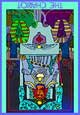
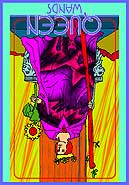 | The card on the far right represents the object being viewed, be it an idea, relationship, or the self. Queen of Wands, when reversed: The dark essence of fire behaving as water, such as steam: The natural embodiment of passion and sensuality, who will do anything to the be the center of attention. A seducer who calculatingly dons the guise of what others desire. A cocky and domineering person, who pushes anyone or anything aside to get what she wants. One who is vengeful and quick to take offense without good cause. May indicate infidelity and contempt for a relationship. |
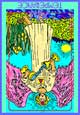
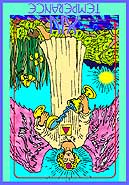 | The card second from the right represents the physical vision: how the object is seen at a base or mechanical level. Temperance, when reversed: Lack of restraint and self-control. Losing one's cool. Energies dispersed through conflicts in personal, business, and spiritual matters. |
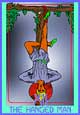
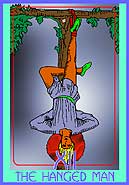 | The card in the middle represents the mental vision: the object personified and seen through a humanized perspective. The Hanged Man: Pausing to reflect. Surrendering to an experience. Adjusting to new ideas through sacrifice. Opening oneself to intuition and enhanced awareness. Letting go of past patterns and growing beyond them. Inner peace, faith, and serenity. |
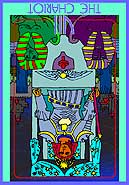 | The card second from the left represents the emotional vision: how passions and values are creatively stimulated by the mental vision. The Chariot, when reversed: Ineffective use of force. Might turned against the weak or the righteous. Senseless violence and warmongering. Lack of discipline and poor direction fan the flames of a situation already out of control. Advance without consideration of the consequences for others. |
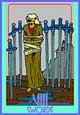
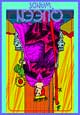
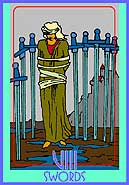 | The card on the far left represents the fourfold or mystical vision: still viewing through the previous three, we now add a spiritual element, revealing unseen aspects of the object. Eight of Swords (Interference): Chagrin at the unforeseen consequences of prior decisions. Criticism, censure, and the imposition of external restrictions. Confusion leading to powerlessness. Inability to focus on the crux of a problem and free oneself from a difficult situation. Being hamstrung by a past failure or humiliation. |
|
|