Today's Tarot for Paul Newman
 |
 
 |
|
   
 |
|
     
 |
|
 |
| The Fourfold Vision spread offers a progression of different ways of looking at an object, person, or situation. It is a powerful tool for gaining deeper insight into the specific subjects of other readings. The Palladini Tarot was created to "bridge the ancient and the future", using elements of Medieval, Egyptian and modern art. It is one of the most popular decks among new students of Tarot. If you would like your own copy of the Palladini Tarot, you can buy it now! |
 | The card on the far right represents the object being viewed, be it an idea, relationship, or the self. Three of Swords (Sorrow): Unsettling news leading to heartbreak or loneliness. Tactless or hurtful words. Acting without consideration for the emotions of others. Betrayal of trust or confidence. The revelation of a painful truth. |
 | The card second from the right represents the physical vision: how the object is seen at a base or mechanical level. Five of Pentacles (Worry): Hard times brought on by addiction, wasteful spending, ill health, or an outside event. Rejection, loneliness, and the need for comfort. May suggest unemployment, a catastrophe in personal finance, or a turn for the worse in business. |
 | The card in the middle represents the mental vision: the object personified and seen through a humanized perspective. Ten of Cups (Satiety): Fulfillment and joy in life and love. Feeling peace, tranquility, and contentment in friends and family. Taking delight in one's good fortune. |
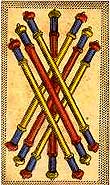
 | The card second from the left represents the emotional vision: how passions and values are creatively stimulated by the mental vision. Eight of Rods (Swiftness), when reversed: Too much force applied too suddenly. A flash in the pan. A foolhardy and untimely plunge into the unknown. Impatience leading to poor decisions in love, business, travel, or spiritual growth. |
 | The card on the far left represents the fourfold or mystical vision: still viewing through the previous three, we now add a spiritual element, revealing unseen aspects of the object. The Devil, when reversed: Resistance of temptation. Freedom from bondage. The pursuit of higher goals despite the influence of luxury and pleasure. Release from obsession with money and power. Liberation from fear, weakness and indecision through communion with higher powers or the inner voice. |
|
|