| The Celtic Cross spread is one of the most popular Tarot spreads, providing varied insight into many aspects of a complex situation and your role in it. The Palladini Tarot was created to "bridge the ancient and the future", using elements of Medieval, Egyptian and modern art. It is one of the most popular decks among new students of Tarot. If you would like your own copy of the Palladini Tarot, you can buy it now! |
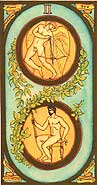
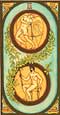
 | The card not shown but at the center of the cross, represents the atmosphere surrounding the central issue. Two of Swords (Peace): Contradictory characteristics brought together as a means of resolving a conflict. Refusing to be ruled by negative emotions. Strife brought to a close through clarity of mind and restraint of force. Turning a blind eye to the minor infractions of others. |
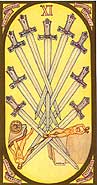
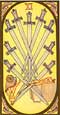
 | The card visible at the center of the cross represents the obstacle that stands in your way - it may even be something that sounds good but is not actually to your benefit. Five of Swords (Defeat), when reversed: Refusing to achieve success through personal degradation. Friendship maintained through the abandonment of a dishonorable gain. Slander and infamy avoided. |
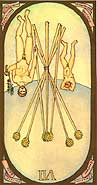
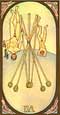
 | The card at the top of the cross represents your goal, or the best you can achieve without a dramatic change of priorities. Nine of Rods (Strength): A pause in the current struggle to ready oneself. Preparation to meet the final conclusive onslaught. Forces assembled in anticipation of trials and tribulations. The steeling of the will to stand or fall. A line drawn in the sand. |
 | The card at the bottom of the cross represents the foundation on which the situation is based. The Tower, when reversed: Unexpected upheaval leading to a positive change in life. Catastrophe survived or narrowly avoided. A new lifestyle and enlightenment. May indicate a broken relationship, divorce, or failure in business or career. |
 | The card at the left of the cross represents a passing influence or something to be released. The Star, when reversed: Lost hopes, doubt and failure. Physical health and mental outlook lost in the outer darkness. Desperation leading to blind faith in false solutions. |
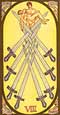
 | The card at the right of the cross represents an approaching influence or something to be embraced. Eight of Pentacles (Prudence), when reversed: Undue attention to small details at the expense of the big picture. Losing yourself in your work, to the detriment of your personal and spiritual life. Making the same mistake repeatedly. Refusing to learn new crafts or skills. |
 | The card at the base of the staff represents your role or attitude. Five of Cups (Disappointment): Suffering a loss and wishing for what might have been. Being crippled by sadness, grief, and vain regret. Indecision brought on by the feeling that you made the wrong choice. Ignoring what you still have. May suggest a broken relationship or tragedy. May also suggest a gift, inheritance, opportunity, partnership, or marriage, but one that falls below expectations. |
 | The card second from the bottom of the staff represents your environment and the people you are interacting with. The Emperor, when reversed: Weakness in character leading to tyranny and abuse of worldly power. Loss of confidence and ambition, coupled with the cold execution of the unthinkable. The inability to carry out plans or command respect. Being unreasonable and prone to fits of rage. A deceiver or demagogue. |
 | The card second from the top of the staff represents your hopes, fears, or an unexpected element that will come into play. The Sun, when reversed: Loneliness and uncertainty. Nostalgic memories. The warm passing glow of dusk. Peace without vigilance. |
 | The card at the top of the staff represents the ultimate outcome should you continue on this course. Ten of Cups (Satiety), when reversed: Dissipation, debauchery, and stagnation. Taking one's good fortune for granted. Problems in domestic and social matters. A false love or infatuation, leading to a lack of fulfillment. |