Today's Runes for Hugh Grant
| The Norn spread is used to plot the crucial elements of past, present, and future, and to reveal the evolution of the situation through the arc of time. Gold Runes are most commonly used for questions about business, career, and property. |
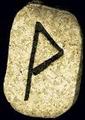
| The left rune represents an important element of the past. Wunjo is the rune of Joy. Since joy is least frequently a solitary emotion, this rune often represents mutual or communal bliss. Wunjo is also seen as a rune of the gods and a rune of perfection, carrying with it the elation that blazes from the creation of a perfect work - perhaps this is the true joy of the gods, that they can create perfection. That aside, this rune does not focus on the struggle for perfection or on our inevitable imperfections, but rather on a job well done and the satisfaction that comes from it. |
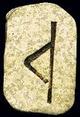
| The middle rune represents a deciding element of the present. Thurisaz the thorn represents barriers and senseless violence. Here we see the thorn overturned. This could mean that erected barriers will not hold, or that senseless violence can be avoided. Also, remember where thorns are found - perhaps this rune portends that a goal can be obtained easily and without interference. Grasp for the rose... |
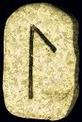
| The right rune represents the critical element of the future. Laguz is the most strongly feminine of runes, representing water. Deep sexuality is suggested by this rune. Through Laguz, water is seen as the ocean - vast, uncontrollable, ever-changing, and vital. When interpreted as the returning tide, Laguz can also predict the inevitable return from a long journey. |
|
|