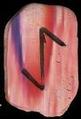
| The Diamond spread reveals the dynamic forces at work in a situation. It is the spread of choice for understanding a hidden conflict. Stone Runes are most commonly used for questions about the natural world and things beyond human control. |
| The bottom rune represents the foundation that forms the basis of the issue. Ken is the rune of light and knowledge, driving away darkness and ignorance and revealing hidden truth. This rune also brings forth images of friendship and comfort. Ken is the light of inspiration, the light of imagination, and a beacon in the darkest hours. |
| The left rune represents one of the forces acting on the issue at hand. Othila is the homeland. Land was the purest form of immovable wealth in Norse civilization, distinct from the movable wealth represented by Fehu. This rune speaks of stability and safety stemming from inheritance, both material and genetic. With respect to the question asked, consider the background of the people and families involved... |
| The right rune represents another of the forces acting on the issue at hand. Algiz plainly shows the antlers of the elk that it represents. The elk is the object of the hunt, and hence Algiz speaks to the pursuit of goals and the thrill of that pursuit. The rune is currently shown reversed, so this could suggest a failed endeavor or a lack of effort. Algiz is also representative of a protective hand (fingers open wide), so the reversed form may indicate a failed defense. |
| The top rune represents the conclusion to which your strivings can carry you. Fehu is the rune of cattle, the symbol of wealth in the old Norse civilization. Since Fehu is the first rune in Frey's aett, it is a rune of fertility as well. As seen here reversed, it can represent barrenness or the loss of wealth. Some interpret Fehu as representing children, in which case the reversal may portend the distancing of a child from her or his parents. |