Today's Runes for Natalie Imbruglia
| The Cross spread is used to plot the arc of your life and the forces acting on it. It is the most popular spread, giving a very complete view of the situation. Gold Runes are most commonly used for questions about business, career, and property. |
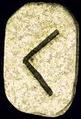
| The left rune represents an important element of the past. Ken is the rune of light and knowledge, driving away darkness and ignorance and revealing hidden truth. This rune also brings forth images of friendship and comfort. Ken is the light of inspiration, the light of imagination, and a beacon in the darkest hours. |
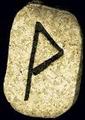
| The middle rune represents a deciding element of the present. Wunjo is the rune of Joy. Since joy is least frequently a solitary emotion, this rune often represents mutual or communal bliss. Wunjo is also seen as a rune of the gods and a rune of perfection, carrying with it the elation that blazes from the creation of a perfect work - perhaps this is the true joy of the gods, that they can create perfection. That aside, this rune does not focus on the struggle for perfection or on our inevitable imperfections, but rather on a job well done and the satisfaction that comes from it. |
| The top rune represents a force that works for you. Laguz is the most strongly feminine of runes, representing water. Deep sexuality is suggested by this rune. Through Laguz, water is seen as the ocean - vast, uncontrollable, ever-changing, and vital. When interpreted as the returning tide, Laguz can also predict the inevitable return from a long journey. |
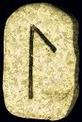
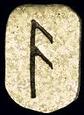
| The bottom Rune represents a force that works against you. Ansuz refers to a god or the spoken word of God. It is the voice of reason, law, prophecy and truth. It is the truth heard in the wind. This rune represents wisdom obtained or knowledge delivered. It is the rune of absolute good advice and true council - the message we all must strive to hear. |
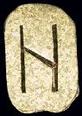
| The right rune represents the critical element of the future, at the core of the final outcome. Hagalaz is the rune of hail. Hail is a destructive and elemental force, so one can expect this rune to represent the disruption of one's life. In the harsh northern winter there is a halt to activity, and so delay or hindrance is frequently associated with this rune. The opposite of chaos is yet more chaos, as illustrated by the fact that this rune cannot be reversed. |
|
|