Today's Runes for Salvador Dali
| The Cross spread is used to plot the arc of your life and the forces acting on it. It is the most popular spread, giving a very complete view of the situation. Spirit Runes are most commonly used for questions about mysticism, spirituality, and religion. |
| The left rune represents an important element of the past. Fehu is the rune of cattle, the symbol of wealth in the old Norse civilization. Since Fehu is the first rune in Frey's aett, it is a rune of fertility as well. As seen here reversed, it can represent barrenness or the loss of wealth. Some interpret Fehu as representing children, in which case the reversal may portend the distancing of a child from her or his parents. |
| The middle rune represents a deciding element of the present. Othila is the homeland. Land was the purest form of immovable wealth in Norse civilization, distinct from the movable wealth represented by Fehu. This rune speaks of stability and safety stemming from inheritance, both material and genetic. With respect to the question asked, consider the background of the people and families involved... |
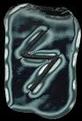
| The top rune represents a force that works for you. Ger is one of the runes that touches on the cycles of the year, in this case the fall harvest. These cycles are eternal, which is represented in the rune by the fact that it is unchanged by reversal. Ger can represent pregnancy or other forms of fruitfulness, and is especially indicative of the cycles of providence and karma - that which has been sown is now being reaped. This rune can also represent the cycles of wealth, for crops were frequently a sign of wealth. |
| The bottom Rune represents a force that works against you. Ehwaz is the rune of the eight-legged horse that the god Odin rode into battle. Horses are symbolic of a number of things. Firstly, horses may symbolize vehicles such as cars, motorcycles, planes, or boats. Secondly, horses may symbolize not wealth, but status. Thirdly, horses may symbolize motion towards an objective. As such, this rune suggests a journey or a quest to achieve a goal or improve one's station in life. On a deeper level, the rune Ehwaz evokes the unique relationship of horse and rider as an inseparable team. To the modern eye this may be the relationship of master and underling, but to the Norse it was a total union. In fact, early representations of Odin are not of a man and a horse, but, of a centaur-like creature - the ultimate symbiosis of Man and Nature. |
| The right rune represents the critical element of the future, at the core of the final outcome. Tyr was the Norse god of war. It was through his sacrifice that the great force of chaos, the wolf Fenrir was bound. Here however, you have drawn the rune reversed. This could mean that a sacrifice made will not lead to the desired result. It could also mean a loss, or a victory overturned. This rune warns against entering into conflicts or negotiations, especially ones requiring that an offering or concession be made - the wolf might take your hand and yet remain unbound. Note also that Tyr was the god of law, so there is a suggestion of a wrongdoer who will avoid justice. |
|
|