Today's Runes for Terry Gilliam
| The Cross spread is used to plot the arc of your life and the forces acting on it. It is the most popular spread, giving a very complete view of the situation. Stone Runes are most commonly used for questions about the natural world and things beyond human control. |
| The left rune represents an important element of the past. Inguz is the rune of completion and fertility. The presence of this rune suggests that tasks which have been initiated will come to fruition. This rune is associated with Ing and Frey, it is this connection that explains its connotations of both fertility and sexuality. The variant of this rune shown here is reminiscent of the twin strands of life, and of the challenge and rewards of bringing together things complimentary. |
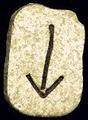
| The middle rune represents a deciding element of the present. Perth, the rune of chance and gambling has been drawn reversed. This can have many possible meanings. It could represent secrets revealed or mysteries uncovered. It could be a warning against gambling - now might not be the time to take a chance. |
| The top rune represents a force that works for you. Ansuz is the spoken word of God. This rune is reversed, indicating that you are misunderstanding the divine voice or failing to hear it all. The word is always correct, so you must strive, whatever the difficulty, to hear correctly. Be wary of the advice you are given, for it may prove incorrect. Do not attribute infallibility to fallible sources... |
| The bottom Rune represents a force that works against you. Othila is the homeland. Land was the purest form of immovable wealth in Norse civilization, distinct from the movable wealth represented by Fehu. This rune speaks of stability and safety stemming from inheritance, both material and genetic. With respect to the question asked, consider the background of the people and families involved... |
| The right rune represents the critical element of the future, at the core of the final outcome. Eoh refers to the Yew tree. The Yew does not go dormant and therefore represents endurance. Even the wood of the tree is strong, resilient, and pliable - the Yew bends, but does not break. The evergreen nature of the Yew is present even in the rune itself, as it cannot be changed even by reversal. This rune is historically symbolic of death, but, as in the Tarot and as suggested by the nature of the Yew tree itself, death is seen only as a transmutation of something eternal and unchanging - the spirit. |
|
|