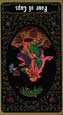
| The Hagall spread is a tool for revealing the path of spiritual growth in difficult situations. It is a favorite of mystics and those confronting a major life challenge. The Russian Tarot of Saint Petersburg is the final commissioned work of Yuri Shakov, a master in the lost art of Russian miniature painting. The rich, dark images lend themselves to questions regarding the struggle of the human spirit in trying times. If you would like your own copy of the Russian Tarot of Saint Petersburg, you can buy it now! |
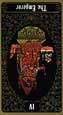
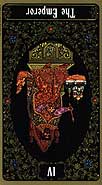 | The card in the middle of the circle represents the core or central issue of the situation. The Emperor, when reversed: Immaturity. Ineffectiveness. Indecision. Inability. Weakness of character. Failure to control petty emotions. |
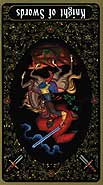 | The card at the bottom of the circle represents something you did to bring the situation about. Knight of Swords, when reversed: Incapacity. Imprudence. Dispute or ruin over a woman. Impulsive mistakes. Conceited fool. Simplicity. |
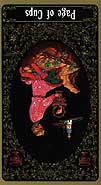 | The card at the bottom left of the circle represents your beliefs, impressions, or expectations. Page of Cups, when reversed: Inclination. Deviation. Susceptibility. Temporary distraction. Seduction. A flatterer. |
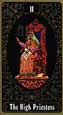
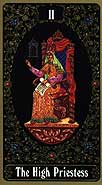 | The card at the bottom right of the circle represents the most likely outcome of the situation given present circumstances. The High Priestess: Wisdom. Sound judgment. Common sense. Serenity. Objectivity. Penetration. Foresight. Intuition. Perception. Self-reliance. Emotionlessness. Platonic relationships. |
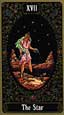
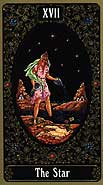 | The card at the upper left of the circle represents the spiritual history of the situation the things you've learned. The Star: Hope. Faith. Inspiration. Bright prospects. Mixing of the past and present. Optimism. Insight. Good omen. Spiritual love. Astrological influence. Fulfillment. Pleasure. The proper balance of desire and work, hope and effort, love and expression. |
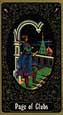
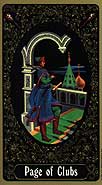 | The card at the top of the circle represents the spiritual tasks and challenges of the present situation. Page of Clubs: A faithful, loyal, person. An envoy. Emissary. Trusted friend. A stranger with good intentions. A consistent person. A bearer of important news. |
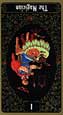
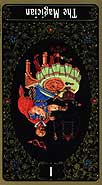 | The card at the upper right of the circle represents the metamorphosis of the spiritual situation, and how your knowledge will evolve. The Magician, when reversed: Weakness of will. Ineptitude. Insecurity. Disquiet. Delay. The use of one's skills for destructive ends. |
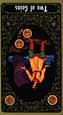
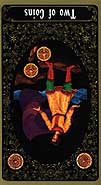 | The card at the left of the lower line represents the person or qualities that will sustain your spiritual journey. Two of Coins (Change), when reversed: Literary ability. Agility in handling matters. Simulated enjoyment. Enforced gaiety. Letter. Message. |
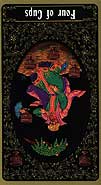 | The card in the middle of the lower line represents the qualities that you express in this circumstance. Four of Cups (Luxury), when reversed: New possibilities. New relationships. New approaches to old problems. New knowledge. |
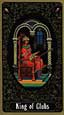
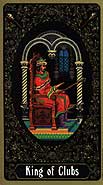 | The card at the right of the lower line represents the person or qualities that will reveal spiritual knowledge. King of Clubs: An honest and conscientious person. Mature. Wise. Devoted. Friendly. Sympathetic. Educated. A gentleman. Generally married. Fatherly. |