| The Relationship spread provides insight into the interaction between two people or entities. It is the spread of choice for questions about partnerships, be they in romance or business. The Benedetti Tarot is a highly stylized deck painted on gold leaf. 7 years in the making, the images were inspired by the Visconti Tarot, the earliest Tarot deck still in existence. The Benedetti Tarot is the favorite deck of those who seek simplicity and elegance in their lives. |
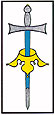
 | The card at the top left represents how you see yourself. Ace of Swords, when reversed: The seed of defeat - perhaps as yet unseen. A challenge met with the invocation of force, leading to disastrous results. Reason and intelligence misdirected or cast aside, resulting in injustice and falsehood. An excessive power abused. May suggest new ideas or information with dangerous implications. |
 | The card at the top right represents how you see your partner. Six of Wands (Victory), when reversed: Arrogance and dangerous overconfidence as the result of a past success. Impudence and false pride in meaningless achievements. Fear of failure coupled with false hopes. Frustration over indefinite delays and motion without progress. |
 | The card in the center left represents how you feel about your partner. Seven of Wands (Valor): Standing courageously for your beliefs in the face of adversity. Fear of failure overcome by the will to succeed. Great obstacles met with heroism and determination. Inner strength brought to bear at a critical moment. |
 | The card in the center right represents what stands between you and your partner. Three of Swords (Sorrow): Unsettling news leading to heartbreak or loneliness. Tactless or hurtful words. Acting without consideration for the emotions of others. Betrayal of trust or confidence. The revelation of a painful truth. |
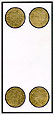
 | The card in the lower left represents how your partner sees you. Four of Pentacles (Power), when reversed: Using your power freely for your own enjoyment and the betterment of others. Coming to grips with progress and using your position to help it along. Finding security and identity someplace other than in the possession of material things. Letting go and encouraging others to find their own path. Being magnanimous and generous with your success. |
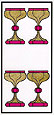
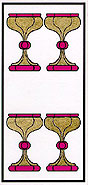 | The card in the lower right represents what your partner feels about you. Four of Cups (Luxury): Being surrounded by love and devotion but taking it for granted. Ignoring the real and longing for the indefinable. Apathy and disengagement from the world. Dissatisfaction with the condition and direction of affairs, but the inability to accept new opportunities. |
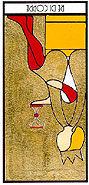 | The card in the center represents the present status or challenge of the relationship. King of Cups, when reversed: The dark essence of water behaving as air, such as rain clouds in a gray sky: A pillar of maturity and patience, hiding a deep insecurity and an indecisive nature. One who secretly lusts for power, but lacks the courage, intellect, or work ethic necessary to take it. A charming seducer who appears innocent and understanding, but is in fact selfish and unfaithful. |