| The Relationship spread provides insight into the interaction between two people or entities. It is the spread of choice for questions about partnerships, be they in romance or business. The Golden Tarot is a modern celebration of late medieval artwork. This deck is the choice of scholars, for it evokes images of elegance amid barbarism, and the light of virtue in dark times. If you would like your own copy of the Golden Tarot, you can buy it now! |
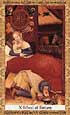
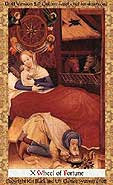 | The card at the top left represents how you see yourself. Wheel of Fortune: The path of destiny. Karma on a grand scale. An unexpected turn of good fortune. A link in the chain of events. Success, luck, and happiness. |
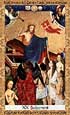
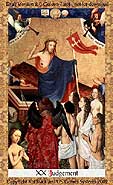 | The card at the top right represents how you see your partner. Judgement: A swift and conclusive decision. The resolution of a matter long unanswered. A change in point of view, most frequently towards greater enlightenment. Final balancing of karma. |
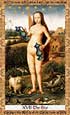
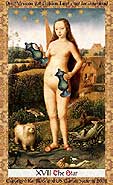 | The card in the center left represents how you feel about your partner. The Star: New hopes and splendid revelations of the future. Insight, inspiration, courage and enlightenment of the spiritual self. Body and mind and converging towards the light at the end of a dark time. |
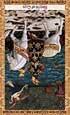
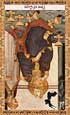
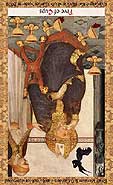 | The card in the center right represents what stands between you and your partner. Five of Cups (Disappointment), when reversed: Accepting a loss. Overcoming sadness and grief to get on with your life. Realizing the value of what you still have. Dissatisfaction gives way to a new hope and understanding. May allude to a broken relationship or tragedy. May also refer to a gift, inheritance, opportunity, partnership, or marriage that has fallen below expectations. |
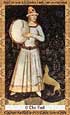
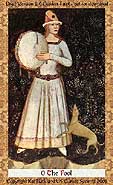 | The card in the lower left represents how your partner sees you. The Fool: Fearlessness, imagination, open-mindedness, and an adventurous spirit. Freedom from cares and worries. Ideas, thoughts, and impulses coming from a completely unexpected place. Nonchalance at the threshold of gaining all or losing all. Extravagance and intoxication with life. The pure and undifferentiated power of creation itself, where ultimate knowledge and oblivion are unified. |
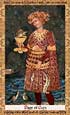
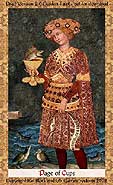 | The card in the lower right represents what your partner feels about you. Page of Cups: The essence of water behaving as earth, such as a wellspring: An unexpected new relationship that is playful and spontaneous. A romantic soul who embraces compassion and imagination with childlike joy. Gentle reflections on love, spirituality, and the importance of personal relationships in business and material affairs. May herald the birth of a child. |
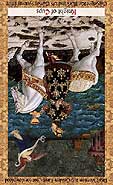 | The card in the center represents the present status or challenge of the relationship. Knight of Cups, when reversed: The dark essence of water behaving as fire, such as a flash flood: Deceptive charm in the service of intense insecurity and rapidly shifting moods. Selfishness, indolence, and a complete lack of maturity. Misguided idealism divorced from practicality. Destructive romantic passions and infidelity. |