| The Relationship spread provides insight into the interaction between two people or entities. It is the spread of choice for questions about partnerships, be they in romance or business. The images of the Minchiate Tarot are drawn from a rare surviving 18th century deck of 97 cards - 19 more than the traditional Tarot. It is considered by many to be the single most powerful divination tool on the web, providing deep insight, rich in ancient symbolism, to any question you may pose. If you would like your own copy of the Minchiate Tarot, you can buy it now!
|
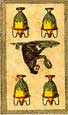
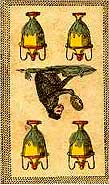 | The card at the top left represents how you see yourself. Four of Cups (Luxury), when reversed: New and unusual relationships and opportunities. The reawakening of your appetite for life or love. The path of excess leading to spiritual rejuvenation and the appearance of novel ambitions. |
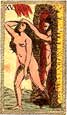
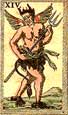
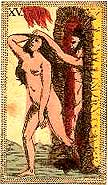 | The card at the top right represents how you see your partner. The Devil's House: Unforeseen catastrophe. An abrupt change, perhaps leading to a new lifestyle and enlightenment. May indicate a broken relationship, divorce, or failure in business or career. |
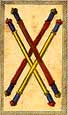
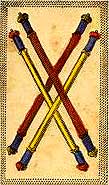 | The card in the center left represents how you feel about your partner. Four of Wands (Completion): A chance to rest and rejoice, having successfully resolved a matter of great import. The initial success of a business venture or creative project. The blossoming of a friendship or romantic relationship. Conclusions drawn based on hard won experience. Spiritual, material, or emotional rewards for diligent effort. May suggest marriage, childbirth, or a victory celebration. |
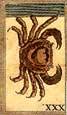
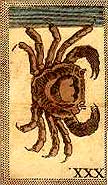 | The card in the center right represents what stands between you and your partner. Cancer, when reversed: Moodiness and passive aggression, easily triggered by obsessive territoriality. Behaving in an overemotional and clingy fashion. Inability to let go of people and things. |
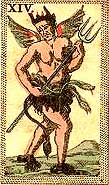 | The card in the lower left represents how your partner sees you. The Devil: Being seduced by the material world and physical pleasures. Lust for and obsession with money and power. Living in fear, domination and bondage. Being caged by an overabundance of luxury. Discretion should be used in personal and business matters. |
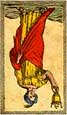
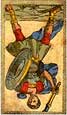
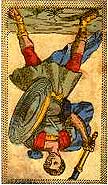 | The card in the lower right represents what your partner feels about you. Page of Wands, when reversed: The dark essence of fire behaving as earth, such as dry wood: The surprising appearance of a new passion or inflammatory news. A trickster who can unexpectedly ignite a dangerous situation. The intensity and childish imagination that can send even the most stable venture spinning wildly out of control. Can represent a person outwardly timid, but harboring unexpected inner fury. May indicate the birth of a child. |
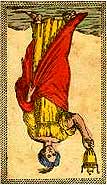 | The card in the center represents the present status or challenge of the relationship. Page of Cups, when reversed: The dark essence of water behaving as earth, such as a wellspring: An unexpected new relationship that is childish and foolish. An idle dreamer oblivious to the realities of the world. Moodiness, sad reflection, and retreat from society. Seduction and deception in personal and business relationships. |