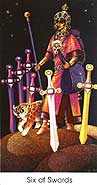
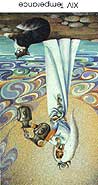
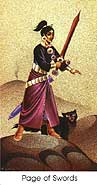
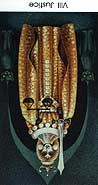
| The Celtic Cross spread is one of the most popular Tarot spreads, providing varied insight into many aspects of a complex situation and your role in it. The images of the Minchiate Tarot are drawn from a rare surviving 18th century deck of 97 cards - 19 more than the traditional Tarot. It is considered by many to be the single most powerful divination tool on the web, providing deep insight, rich in ancient symbolism, to any question you may pose. If you would like your own copy of the Minchiate Tarot, you can buy it now!
|
 | The card not shown but at the center of the cross, represents the atmosphere surrounding the central issue. Wheel of Fortune, when reversed: An unexpected turn of bad luck. A broken sequence of events. Outside influences for the worse. An inescapable descent due to Fate or Karma. Great changes taking place as a result of earlier actions that cannot be taken back. Misfortune, failure and reluctance to use free will. |
 | The card visible at the center of the cross represents the obstacle that stands in your way - it may even be something that sounds good but is not actually to your benefit. The Hanged Man: Pausing to reflect. Surrendering to an experience. Adjusting to new ideas through sacrifice. Opening oneself to intuition and enhanced awareness. Letting go of past patterns and growing beyond them. Inner peace, faith, and serenity. |
 | The card at the top of the cross represents your goal, or the best you can achieve without a dramatic change of priorities. King of Swords, when reversed: The dark essence of air, such as a gray sky: A mature leader of unyielding ethics and absolute authority. An incorruptible judge, whose devotion to the letter of the law cannot be swayed by emotion, mercy, or exigent circumstances. Perfect clarity of thought, excessive use of force, and mastery of language as a tool for deception. One who, like a great tyrant, inspires not love or devotion, but fear, respect, and obedience. |
 | The card at the bottom of the cross represents the foundation on which the situation is based. Seven of Coins (Assessment), when reversed: Labors abandoned before completion. Impatience, lack of effort, and the wasting of time. Idle and unprofitable speculation. |
 | The card at the left of the cross represents a passing influence or something to be released. Three of Cups (Abundance), when reversed: A time of shallow overindulgence, followed depletion. The successful but utterly unfulfilling conclusion of a matter. Satisfaction from sensual pleasures divorced from any sense of love. May indicate problems prematurely dismissed or a victory claimed before it is certain. |
 | The card at the right of the cross represents an approaching influence or something to be embraced. Taurus: A warm and loving heart dedication to material security and stability. Persistence and determination in all pursuits. Enjoyment of tranquil luxury. |
 | The card at the base of the staff represents your role or attitude. Four of Swords (Truce), when reversed: Restlessness and mental disharmony. Deserting a struggle in progress. A temporary retreat from stress that turns into a permanent rout. A lack of vigilance that could lead to disaster. |
 | The card second from the bottom of the staff represents your environment and the people you are interacting with. Cancer: Being loving and emotional. Showing sympathy and providing shelter for others. Relying on intuition and imagination in personal affairs, and caution and shrewdness in domestic matters. |
 | The card second from the top of the staff represents your hopes, fears, or an unexpected element that will come into play. Fire: Boundless creative energy waiting to be unleashed. A burst of passion and vitality that can be harnessed to reshape the future and achieve your desires. Swift movement and decisive action. |
 | The card at the top of the staff represents the ultimate outcome should you continue on this course. Prudence: Carefully considering the circumstances. Avoiding an unnecessary or premature commitment. Developing a backup or contingency plan. Determining whether the solution is worse than the problem. |