Today's Tarot for Charles Bronson
| The Creative Process spread is designed specifically to peer into the nature of a project or creative undertaking, and shine a spotlight on the evolution of its parts. The William Blake Tarot explores the mystical vision and artistry of the renowned English painter and poet. Through rich interpretations focused on creative undertakings, it has long been the deck of choice for artists, writers, musicians, and thinkers. For more information about this deck, or to buy your own personal copy, go to www.blaketarot.com.
|
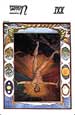
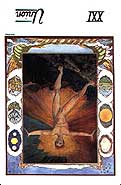 | The card in the middle represents the creative force behind the project, be it a person, organization, or other entity. Union, when reversed: Something vitally important to you refuses to come together. Discord between male and female forces, or inner and outer life. Holding back. Incompleteness. Fear of intimacy or self-sacrifice. |
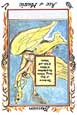
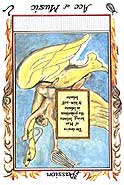 | The card on the top represents imagination - the prophetic image that stems from the creative force of the previous card to initiate the project. This is the poetry or voice of the undertaking. Ace of Music (Passion), when reversed: Emotions repressed or violently out of control. A lack of passion or connection to your highest potential. Being led astray from meaning and fulfillment. Inhibition. In the creative process: A passionate desire to rise above the norm, to soar to personal new heights of creative vision. |
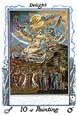
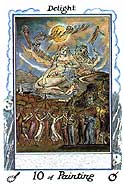 | The card on the left represents emotion - the feelings aroused by or surrounding the ideation of the project that takes place in the previous card. This is the music or scent of the undertaking. Ten of Painting (Delight): Your work or ideal takes on a life of it own. Financial prosperity. Achievement or promotion on the job. Inheriting something of tangible or permanent value. Family gatherings and traditions. Finding your roots. Active involvement in community and societal spheres. In the creative process: The success of completion of your project is cause for celebration and an opportunity to honor all the gods and spirits that participated in your benefit. |
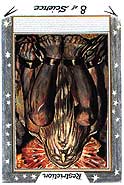 | The card on the bottom represents thought - the analytical process of organizing the project and capturing the emotional content of the previous card. This is the science or vision of the undertaking. Eight of Science (Restriction), when reversed: Suppressed creative energy waiting to burst free. External constraints provide much-needed focus. Intense mental fervor despite outward calm. Freedom from your prejudices, dogmatic attitudes, and fear of failure. Self discipline and mastery over ones emotions. In the creative process: Make your obstructions or limitations productive by stimulating greater intensity of thought and a deeper sense of spiritual freedom. |
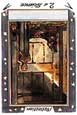
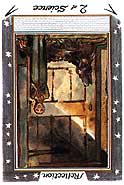 | The card on the right represents manifestation - the real work involved in completing the project, and the form it will take upon culmination. This is the painting or touch of the undertaking. Two of Science (Reflection), when reversed: Hesitating before opportunity. Dilemma. Uncertain whether to stay put or go on. Waiting for something to happen. Denying your feelings. In the creative process: An uneasy decision about which way to proceed, perhaps between a rational versus intuitive approach. Weigh the potential rewards versus the possible dangers. |
|
|