Today's Tarot for Charles Lindbergh
| The Three Fates spread is an exceptionally popular way to gain insight into the emerging arc of the past, present, and future. The International Icon Tarot renders traditional occult symbolism in Swiss iconography. It is a humorous and direct approach to divination, and one of our favorite new decks. If you would like your own copy of the International Icon Tarot, you can buy it now!
|
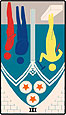
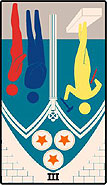 | The left card represents an important element of the past. Three of Pentacles (Works), when reversed: Delays in the commencement of business, commercial transactions, or employment. Holding back or failing to use one's abilities to their full potential. Shoddy workmanship and lack of attention to detail. Being hamstrung by convention, or failing to temper artistic fancy with an understanding of reality. |
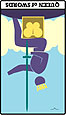
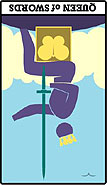 | The middle card represents a deciding element of the present. Queen of Swords, when reversed: The dark essence of air behaving as water, such as a cold rain: A person gifted with both keen logic and natural intuition, giving them uncanny powers of perception and insight. One who easily sees the weakness in any argument, and savages friend and foe alike with biting sarcasm. Dry and vicious wit covering a hollow sense of isolation and dissatisfaction with life. |
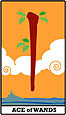
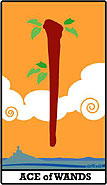 | The right card represents a critical element of the future. Ace of Wands: The seed of a new venture - perhaps as yet unseen. An opportunity to be met with boldness, vigor, and enthusiasm. The herald of birth, invention, or entrepreneurship. An innate and primal force released. May suggest a surge of vitality, creativity, or fertility that can set things in motion. |
|
|