| The Celtic Cross spread is one of the most popular Tarot spreads, providing varied insight into many aspects of a complex situation and your role in it. The Ator Tarot is a smart and whimsical spin on Rider Waite symbolism. The clunky and adorable characters of the Ator Tarot make it the deck of choice for those seeking a refreshing approach to divination. If you would like your own copy of the Ator Tarot, you can buy it now! |
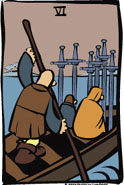 | The card not shown but at the center of the cross, represents the atmosphere surrounding the central issue. Six of Swords (Science): Trusting in intelligence and intuition and setting off into the unknown. Leaving an untenable situation and charting a new course. Passage from difficulty and progress towards a solution. The road to recovery. Travel and exploration. |
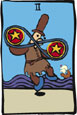
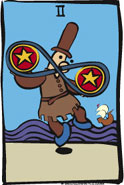 | The card visible at the center of the cross represents the obstacle that stands in your way - it may even be something that sounds good but is not actually to your benefit. Two of Pentacles (Change): Balance and harmony achieved in a time of upheaval and transformation. Taking two steps forward for every one step back. Shifting the importance of projects and priorities to keep everything on track. A change in occupation or location. |
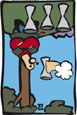
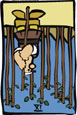
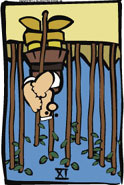 | The card at the top of the cross represents your goal, or the best you can achieve without a dramatic change of priorities. Nine of Wands (Strength), when reversed: Delayed preparations for an impending trial. Efforts compromised by traitors or saboteurs. The scattering of forces before the conclusive battle is fought. Ill health and faltering of the will. |
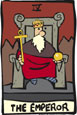
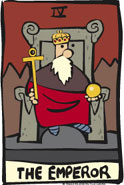 | The card at the bottom of the cross represents the foundation on which the situation is based. The Emperor: Worldly authority and power. Social mastery and oratory. One who is intelligent, experienced, confident and reasonable. A patriarch or primary male influence. The motive force of politics and society. The ability to fulfill plans and use mental control over the emotions. |
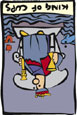
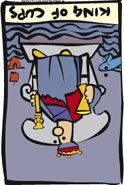 | The card at the left of the cross represents a passing influence or something to be released. King of Cups, when reversed: The dark essence of water behaving as air, such as rain clouds in a gray sky: A pillar of maturity and patience, hiding a deep insecurity and an indecisive nature. One who secretly lusts for power, but lacks the courage, intellect, or work ethic necessary to take it. A charming seducer who appears innocent and understanding, but is in fact selfish and unfaithful. |
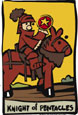
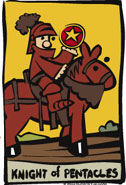 | The card at the right of the cross represents an approaching influence or something to be embraced. Knight of Pentacles: The essence of earth behaving as fire, such as molten magma: One slow to action, but decisive and unrelenting once set in motion. A force of nature whose methods are as predictable and dependable as they are unstoppable. The voice of duty, honor, and responsibility. The will to the change the world, not through bold action, but through the thorough and unwavering application of proven means. |
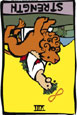
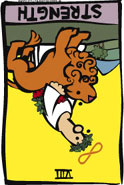 | The card at the base of the staff represents your role or attitude. Strength, when reversed: Weakness in the face of obstacles and adversity. Tremendous power released at the wrong moment. Inability to defend oneself. Confusion, and lack of preparedness. Illness, hardship, distress and the failing of physical force. Dominant behavior, abusiveness and a possible loss of reputation. |
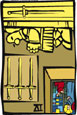
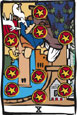
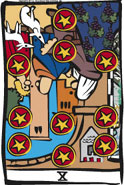 | The card second from the bottom of the staff represents your environment and the people you are interacting with. Ten of Pentacles (Wealth), when reversed: Material prosperity and riches squandered through slothfulness, gambling, or family problems. The loss of reputation or inheritance, or the failure to pass an inheritance along to one's children. |
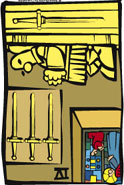 | The card second from the top of the staff represents your hopes, fears, or an unexpected element that will come into play. Four of Swords (Truce), when reversed: Restlessness and mental disharmony. Deserting a struggle in progress. A temporary retreat from stress that turns into a permanent rout. A lack of vigilance that could lead to disaster. |
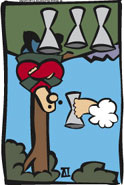 | The card at the top of the staff represents the ultimate outcome should you continue on this course. Four of Cups (Luxury), when reversed: New and unusual relationships and opportunities. The reawakening of your appetite for life or love. The path of excess leading to spiritual rejuvenation and the appearance of novel ambitions. |