Today's Tarot for David Boreanaz
| The Twisting Path spread provides insight into the path ahead of you and the choices you must make. This is the spread for situations where more than one pitfall may lie ahead. The Aquatic Tarot is a modern watercolor interpretation of the classic Rider Waite symbolism. It is rapidly becoming one of the most popular decks, due to both its spectacular beauty and its traditional imagery. |
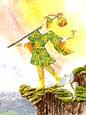
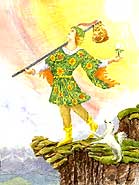 | The card at the lower left, represents the first decision along your path. The Fool: Fearlessness, imagination, open-mindedness, and an adventurous spirit. Freedom from cares and worries. Ideas, thoughts, and impulses coming from a completely unexpected place. Nonchalance at the threshold of gaining all or losing all. Extravagance and intoxication with life. The pure and undifferentiated power of creation itself, where ultimate knowledge and oblivion are unified. |
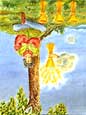
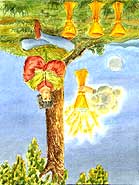 | The card to the far left represents the first false path that may lead you astray. Four of Cups (Luxury), when reversed: New and unusual relationships and opportunities. The reawakening of your appetite for life or love. The path of excess leading to spiritual rejuvenation and the appearance of novel ambitions. |
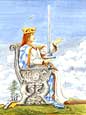
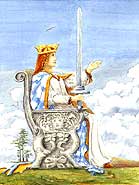 | The card in the middle represents the second decision along your path. Queen of Swords: The essence of air behaving as water, such as a refreshing mist: A person gifted with both keen logic and natural intuition, giving them uncanny powers of perception and insight. One who easily sees past deception and confusion to the heart of a matter, and understands both sides of any argument. The embodiment of calm, forthrightness, and wit, in the face of even the most trying circumstances. |
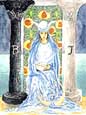
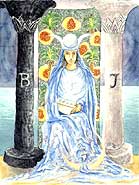 | The card at the lower right represents the second false path that may lead you astray. The High Priestess: A pure, exalted and gracious influence. Education, knowledge, wisdom, and esoteric teachings. The forces of nature. Intuition, foresight, and spiritual revelation of the most mysterious and arcane sort. |
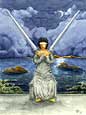
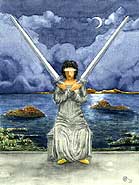 | The card at the top represents one possible mask of your true destination. Two of Swords (Peace): Contradictory characteristics brought together as a means of resolving a conflict. Refusing to be ruled by negative emotions. Strife brought to a close through clarity of mind and restraint of force. Turning a blind eye to the minor infractions of others. |
|
|