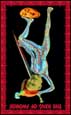
Today's Tarot for Edward Norton
| The Creative Process spread is designed specifically to peer into the nature of a project or creative undertaking, and shine a spotlight on the evolution of its parts. The Curious Tarot is the rarest and most unusual of modern decks. The cards form a surreal collage of American consumer imagery, eerily capturing the archetypes of the atomic age. It is the deck of those who seek to harness the ancient tribal energy that courses through the modern urban world. There are only 100 Curious Tarot decks in existence - if you want one, buy it now!
|
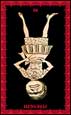
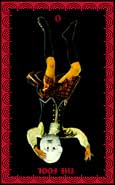 | The card in the middle represents the creative force behind the project, be it a person, organization, or other entity. The Fool, when reversed: Apathy, negligence, and dangerous carelessness. Unquenchable wanderlust. Obsession with someone or something. Losing all sense of proportion. Foolhardy adventuring and lack of interest in critical matters. Immature or unrealistic ideals. Strange impulses and desires coming from unexpected sources. Vanity, delirium, folly, and oblivion. |
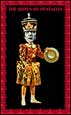
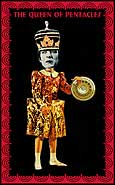 | The card on the top represents imagination - the prophetic image that stems from the creative force of the previous card to initiate the project. This is the poetry or voice of the undertaking. Queen of Pentacles: The essence of earth behaving as water, such as a hot spring: A warm and generous host, providing shelter and comfort for all who would seek it. A person steadfast, practical, and domestic, able to create opulence and stability in any setting. The qualities of maturity and sensibility, coupled with an innate appreciation for nature and the material world. |
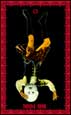
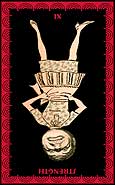 | The card on the left represents emotion - the feelings aroused by or surrounding the ideation of the project that takes place in the previous card. This is the music or scent of the undertaking. Strength, when reversed: Weakness in the face of obstacles and adversity. Tremendous power released at the wrong moment. Inability to defend oneself. Confusion, and lack of preparedness. Illness, hardship, distress and the failing of physical force. Dominant behavior, abusiveness and a possible loss of reputation. |
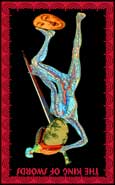 | The card on the bottom represents thought - the analytical process of organizing the project and capturing the emotional content of the previous card. This is the science or vision of the undertaking. King of Swords, when reversed: The dark essence of air, such as a gray sky: A mature leader of unyielding ethics and absolute authority. An incorruptible judge, whose devotion to the letter of the law cannot be swayed by emotion, mercy, or exigent circumstances. Perfect clarity of thought, excessive use of force, and mastery of language as a tool for deception. One who, like a great tyrant, inspires not love or devotion, but fear, respect, and obedience. |
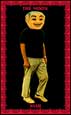
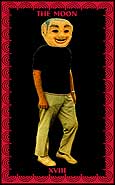 | The card on the right represents manifestation - the real work involved in completing the project, and the form it will take upon culmination. This is the painting or touch of the undertaking. The Moon: Cyclic transformation covering the mysterious forces of the night. Feminine beauty and the intoxicating vitality of youth. The metamorphosis from beauty to beast and vice versa. Occult forces, sensitivities and intense dreams. Dangerous situations and perilous times. |
|
|