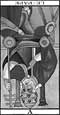
Today's Tarot for Faith Hill
| The Creative Process spread is designed specifically to peer into the nature of a project or creative undertaking, and shine a spotlight on the evolution of its parts. The Marseilles Tarot is an 18th century creation of obscure origins. It predates the occult symbolism of the Rider Waite deck by roughly 200 years, giving the readings a unique and rustic flavor. Many swear by this deck as the true oracle of the common man. If you would like your own copy of the Marseilles Tarot, you can buy it now! |
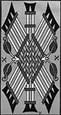
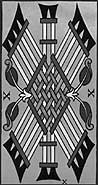 | The card in the middle represents the creative force behind the project, be it a person, organization, or other entity. Ten of Batons (Oppression): Success and gain, leading you to take on a burden greater than you can carry. Noble leadership transformed, through lack of restraint, into tyranny. The crushing weight of ultimate responsibility. Having spent their fuel, the engines of creation grind to a halt. |
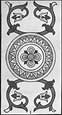
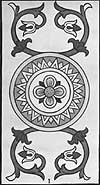 | The card on the top represents imagination - the prophetic image that stems from the creative force of the previous card to initiate the project. This is the poetry or voice of the undertaking. Ace of Coins: The seed of prosperity and material gain - perhaps as yet unseen. A new foundation from which to turn your dreams into reality. The need to focus on the practical and understand the dynamics of the natural world. May represent a gift, document, inheritance, or an unexpected opportunity for physical achievement. |
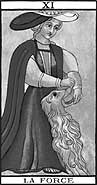 | The card on the left represents emotion - the feelings aroused by or surrounding the ideation of the project that takes place in the previous card. This is the music or scent of the undertaking. La Force (Strength): Raw power. Health and physical fortitude. A surge of tremendous force. Recovery from sickness. Victory after apprehension and fear. The ability to face and overcome opposition brings the inner qualities of strength and forbearance. Delays and setbacks will be overcome. |
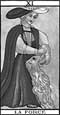
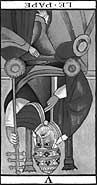 | The card on the bottom represents thought - the analytical process of organizing the project and capturing the emotional content of the previous card. This is the science or vision of the undertaking. Le Pape (The Pope), when reversed: Authoritarianism. Inflexible and dogmatic thinking. A calcified old regime. Bad or incompetent advice. Inability to hear a higher or inner voice, or pretending to hear it for personal gain. |
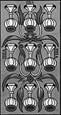
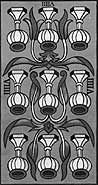 | The card on the right represents manifestation - the real work involved in completing the project, and the form it will take upon culmination. This is the painting or touch of the undertaking. Nine of Cups (Happiness), when reversed: Vanity, conceit, and smugness in romance, friendship, or other relationships. Achieving what you always thought you wanted. Overindulging in food, drink, or the pleasures of the flesh. A state of joy and abundance that is shallow and fleeting. |
|
|