| The Celtic Cross spread is one of the most popular Tarot spreads, providing varied insight into many aspects of a complex situation and your role in it. The Cat People Tarot paints a picture of faraway lands trod by mystical archetypes and their feline companions. This deck is a perfect tool for dreamers and idealists, and is a great choice for divining the nature of human imagination. If you would like your own copy of the Cat People Tarot, you can buy it now! |
 | The card not shown but at the center of the cross, represents the atmosphere surrounding the central issue. The Emperor: Worldly power. Accomplishment. Confidence. Wealth. Stability. Authority. Indomitable spirit. Leadership. Maturity. Father. Brother. Husband. Male influence. Direct pressure. Conviction. Domination of intelligence and reason over emotion and passion. Attainment of goals. Achievement. Desire to increase domination in every direction. A capable person who is knowledgeable and competent. |
 | The card visible at the center of the cross represents the obstacle that stands in your way - it may even be something that sounds good but is not actually to your benefit. Six of Cups (Pleasure): Memories. Past influences. Things that have vanished. Childhood past. Nostalgia. Faded images. Longing. |
 | The card at the top of the cross represents your goal, or the best you can achieve without a dramatic change of priorities. Three of Pentacles (Works): Great skill in trade or work. Mastery. Perfection. Artistic ability. Dignity. Renown. Rank. Power. |
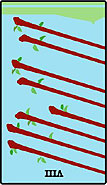
 | The card at the bottom of the cross represents the foundation on which the situation is based. Seven of Wands (Valor), when reversed: Consternation. Anxiety. Embarrassment. Indecision. Hesitancy causing losses. Perplexity. Doubt. |
 | The card at the left of the cross represents a passing influence or something to be released. Four of Cups (Luxury): Wariness. Aversion. Disgust. Disappointment. Unhappiness. Bitter experience. Stationary period in one's life. |
 | The card at the right of the cross represents an approaching influence or something to be embraced. Death: Transformation. Clearing away the old to make way for the new. Risk for renewal. Unexpected change. Loss. Failure. Abrupt change of the old self, though not necessarily physical death. The ending of a familiar situation or friendship. Loss of income or financial security. Beginning of new era. Illness, possibly even death. Streak of bad luck. A loan that will not be repaid. |
 | The card at the base of the staff represents your role or attitude. The High Priest: Mercy. Kindness. Goodness. Forgiveness. Inspiration. Compassion. Servitude. Overt reserve. Captivity to one's own ideas. Tendency to cling to ideas and principles even if outdated. A person to whom one has recourse. Conformity. A religious r spiritual leader. A person with a sense of historical importance. |
 | The card second from the bottom of the staff represents your environment and the people you are interacting with. Three of Wands (Virtue): Practical knowledge. Business acumen. Enterprise. Negotiations. Trade, Commerce. |
 | The card second from the top of the staff represents your hopes, fears, or an unexpected element that will come into play. The Tower, when reversed: Continued oppression. Following old ways. Living in a rut. Inability to effect any worthwhile change. Entrapment in an unhappy situation. Imprisonment. |
 | The card at the top of the staff represents the ultimate outcome should you continue on this course. Two of Swords (Peace): Balance force. Harmony. Firmness. Concord. Offsetting factors. Stalemate. Affection. |