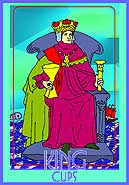
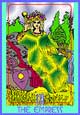
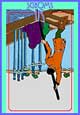
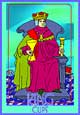
| The Celtic Cross spread is one of the most popular Tarot spreads, providing varied insight into many aspects of a complex situation and your role in it. The William Blake Tarot explores the mystical vision and artistry of the renowned English painter and poet. Through rich interpretations focused on creative undertakings, it has long been the deck of choice for artists, writers, musicians, and thinkers. For more information about this deck, or to buy your own personal copy, go to www.blaketarot.com.
|
 | The card not shown but at the center of the cross, represents the atmosphere surrounding the central issue. Five of Painting (Hardship), when reversed: Transcending difficulties, insecurity, and financial worries. Taking responsibility for ones own actions or mistakes. Stripping down for action. Facing up to your fears and critics. Issues of support, loyalty, or companionship in hard times. In the creative process: Realize that the problems you are trying to solve may put you at odds with others who do not recognize your value. Be ready to grapple with personal blocks and fears, and to hear more from your inner voice than reasons why things won't work. |
 | The card visible at the center of the cross represents the obstacle that stands in your way - it may even be something that sounds good but is not actually to your benefit. Ace of Poetry (Inspiration), when reversed: The madness of divine inspiration. The illusion of higher consciousness. Obsession with a personal vision of truth and beauty, leading to a sense of false ecstasy. Mistaking cynical seduction for creative expression. Delusion of being guided by a higher force. In the creative process: Being in contact with the purest and highest part of your being provides the impetus for fresh expressions in both art and life. |
 | The card at the top of the cross represents your goal, or the best you can achieve without a dramatic change of priorities. Man of Painting, when reversed: The need to dominate the situation. Allowing theory to get in the way of pragmatics. Intoxication with a highly charged situation. Taking a dogmatic and self-indulgent approach. Obsessive focus on the task at hand. Bathing in the spotlight. In the creative process: Test and refine your ideas or product to see if it works as planned; be practical yet innovative. |
 | The card at the bottom of the cross represents the foundation on which the situation is based. Woman of Poetry: "To go forth to the Great Harvest & Vintage of the Nations". Radiating confidence, pride, and self-assurance. Being unafraid to promote yourself or reach for what you really want. Being generous and open-hearted, but also dramatic and assertive. Wanting to inspire others. Creative self-fulfillment. Gathering a rich harvest from the situation. Expressing intuitive knowledge and leadership. Mastery of expression. In the creative process: With complete confidence in your expressive abilities, you serve as a guiding light to inspire growth and confidence in others. |
 | The card at the left of the cross represents a passing influence or something to be released. Angel of Music: "Like as an angel glitt'ring in the sky, / In times of innocence and holy joy: / The joyful shepherd stops his grateful song. / To hear the music of an angel's tongue". A surge of passionate emotion. A call for compassion in the situation. A need to rise above a mundane or materialistic milieu. Possibility of being granted a favor or indulgence. An unexpected emotional influence. Emerging impulse to personal transformation. Development of appropriate aesthetic sensibility. Intuitive awareness of public needs or the mass media. In the creative process: An inrush of excitement or appearance of a new factor offers alternative possibilities for your work. |
 | The card at the right of the cross represents an approaching influence or something to be embraced. Knowledge, when reversed: An important, possibly moral choice that you refuse to face. Uncomfortable insight into a relationship or one's own involvement in a relationship. Inability to integrate all levels of consciousness within oneself. Denial of intimacy and open communications. |
 | The card at the base of the staff represents your role or attitude. Eight of Music (Discontent): "Clouded with discontent & brooding in their minds terrible things". Disappointment or dissatisfaction. Troubled emotions below the surface. Feeling at the mercy of circumstances. Possibility of emotional breakdown. Fears of what may happen. Apprehensions about the unknown. Paranoia. Feelings of missing out on something. Former values and friends no longer interest you. Wanting to escape the situation. In the creative process: Psychodrama and emotional torments can serve as imaginative stimulants. Expressing and documenting what you feel can be artful as well as healing. |
 | The card second from the bottom of the staff represents your environment and the people you are interacting with. Eight of Painting (Discipline), when reversed: Mismanagement of your workload or time. Failing to get a grip on the situation. Refusal to listen to a mentor or inner guide. A need for physical assessment and self-improvement. Seek appropriate education and training. Inability to take one step at a time. Lack of due diligence. Collapsing under a mountain of work. In the creative process: Even though you may have a long way to go, a methodical approach incorporating guidance and training will ultimately lead you to the top. |
 | The card second from the top of the staff represents your hopes, fears, or an unexpected element that will come into play. Child of Poetry, when reversed: Lack of artistic discipline. Refusal to introspect or learn from the mistakes of others. Taking unnecessary risks. Bending over backwards in your effort to see the appropriate direction for self-development and creativity. In the creative process: An inspirational breakthrough is at your feet; it is up to your to pick up the energy and make the most of it. |
 | The card at the top of the staff represents the ultimate outcome should you continue on this course. Ace of Science (Intellect), when reversed: Plunging into the depths of knowledge, at the expense of life itself. Idle pursuit of more projects than you can handle. Dabbling in many skills without every truly learning them. The worship of ideas over implementation. Workaholism, particularly in the mental sphere. Self-centered point of view. Mistaking knowledge for truth. Reliance on logic, method, and research to solve problems that demand distance and insight. In the creative process: A time for "blind" absorption of data, for intense focus on research and documentation of the creative project being initiated. |