Today's Tarot for George Orwell
| The Hagall spread is a tool for revealing the path of spiritual growth in difficult situations. It is a favorite of mystics and those confronting a major life challenge. The International Icon Tarot renders traditional occult symbolism in Swiss iconography. It is a humorous and direct approach to divination, and one of our favorite new decks. If you would like your own copy of the International Icon Tarot, you can buy it now!
|
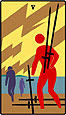
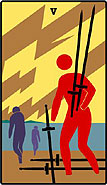 | The card in the middle of the circle represents the core or central issue of the situation. Five of Swords (Defeat): A success earned through personal degradation. Separation from friends brought about by an unfeeling and coldly calculated act. Temporary victory tainted by dishonor and providing fuel for eventual defeat. |
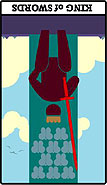 | The card at the bottom of the circle represents something you did to bring the situation about. King of Swords, when reversed: The dark essence of air, such as a gray sky: A mature leader of unyielding ethics and absolute authority. An incorruptible judge, whose devotion to the letter of the law cannot be swayed by emotion, mercy, or exigent circumstances. Perfect clarity of thought, excessive use of force, and mastery of language as a tool for deception. One who, like a great tyrant, inspires not love or devotion, but fear, respect, and obedience. |
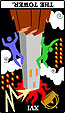
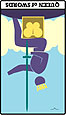
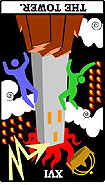 | The card at the bottom left of the circle represents your beliefs, impressions, or expectations. The Tower, when reversed: Unexpected upheaval leading to a positive change in life. Catastrophe survived or narrowly avoided. A new lifestyle and enlightenment. May indicate a broken relationship, divorce, or failure in business or career. |
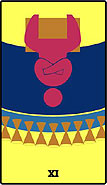 | The card at the bottom right of the circle represents the most likely outcome of the situation given present circumstances. Nine of Cups (Happiness), when reversed: Vanity, conceit, and smugness in romance, friendship, or other relationships. Achieving what you always thought you wanted. Overindulging in food, drink, or the pleasures of the flesh. A state of joy and abundance that is shallow and fleeting. |
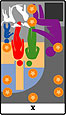
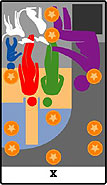 | The card at the upper left of the circle represents the spiritual history of the situation the things you've learned. Ten of Pentacles (Wealth), when reversed: Material prosperity and riches squandered through slothfulness, gambling, or family problems. The loss of reputation or inheritance, or the failure to pass an inheritance along to one's children. |
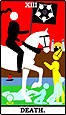
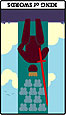
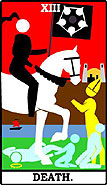 | The card at the top of the circle represents the spiritual tasks and challenges of the present situation. Death: A major change or transformation, possibly traumatic and unexpected. Freedom from the shackles of the past. A new beginning. Death coupled with rebirth, usually related to consciousness and lifestyle. |
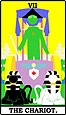
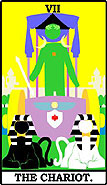 | The card at the upper right of the circle represents the metamorphosis of the spiritual situation, and how your knowledge will evolve. The Chariot: Victory through might. Advancement through bold action. Change through force. Order established through vigilance. A trying situation mastered by balancing opposing forces against each other. Discipline, individual effort and endurance will turn the tide. |
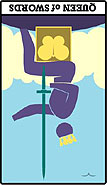 | The card at the left of the lower line represents the person or qualities that will sustain your spiritual journey. Queen of Swords, when reversed: The dark essence of air behaving as water, such as a cold rain: A person gifted with both keen logic and natural intuition, giving them uncanny powers of perception and insight. One who easily sees the weakness in any argument, and savages friend and foe alike with biting sarcasm. Dry and vicious wit covering a hollow sense of isolation and dissatisfaction with life. |
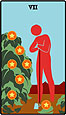
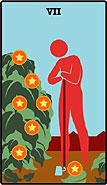 | The card in the middle of the lower line represents the qualities that you express in this circumstance. Seven of Pentacles (Assessment): A pause to check on the progress of your labors. Making difficult financial decisions. Exercising patience and perseverance. Evaluating the status of your work and your options for the future. |
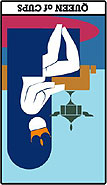 | The card at the right of the lower line represents the person or qualities that will reveal spiritual knowledge. Queen of Cups, when reversed: The dark essence of water, such as a deep and foreboding lake: Discomfort with the worlds of mind and matter, leading to a retreat to the spiritual. The embrace of negative relationships, driven by the desperate fear of being alone. Devotion to fantasies and daydreams, to the exclusion of practical skills or the pursuit of knowledge. Insecurity leading to dishonor, vice, and undue susceptibility to outside influences. |
|
|