| The Relationship spread provides insight into the interaction between two people or entities. It is the spread of choice for questions about partnerships, be they in romance or business. The Cat People Tarot paints a picture of faraway lands trod by mystical archetypes and their feline companions. This deck is a perfect tool for dreamers and idealists, and is a great choice for divining the nature of human imagination. If you would like your own copy of the Cat People Tarot, you can buy it now! |
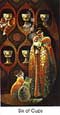
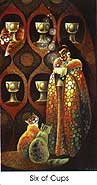 | The card at the top left represents how you see yourself. Six of Cups (Pleasure): Memories. Past influences. Things that have vanished. Childhood past. Nostalgia. Faded images. Longing. |
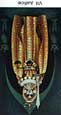
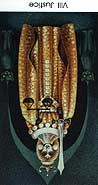 | The card at the top right represents how you see your partner. Justice, when reversed: Bias. False accusations. Bigotry. Severity in judgment. Intolerance. Unfairness. Abuse. |
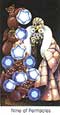
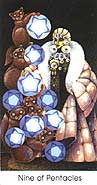 | The card in the center left represents how you feel about your partner. Nine of Pentacles (Gain): Accomplishment. Discernment. Discretion. Foresight. Safety. Prudence. Material well-being. Love of nature. |
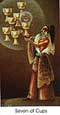
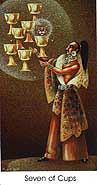 | The card in the center right represents what stands between you and your partner. Seven of Cups (Temptation): Fantasy. Unrealistic attitudes. Imagination. Daydreams. Foolish whims. Wishful thinking. Illusionary success. |
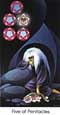
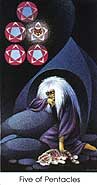 | The card in the lower left represents how your partner sees you. Five of Pentacles (Worry): Material trouble. Destitution. Loss. Failure. Error. Impoverishment. Lover. Misaffection. |
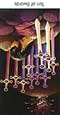
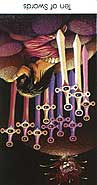 | The card in the lower right represents what your partner feels about you. Ten of Swords (Ruin), when reversed: Benefit. Profit. Temporary gain. Improvement. Passing success. Momentary advantage. Temporary favor. |
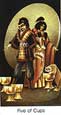
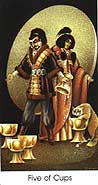 | The card in the center represents the present status or challenge of the relationship. Five of Cups (Disappointment): Partial loss. Regret. Friendship without real meaning. Marriage without real love. Imperfection. Flaw. Delayed inheritance. Incomplete union or partnership. |