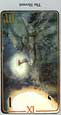
| The Two Paths spread provides insight into an important decision ahead of you, the possible outcomes, and the forces that draw you towards each of these outcomes. The Haindl Tarot weaves a tapestry of haunting beauty from the traditions of Native America, the Holy Grail, the I Ching, Kabbalah and the Norse Runes, and is the deck of choice for mystics and those seeking enlightenment. If you would like your own copy of the Haindl Tarot, you can buy it now! |
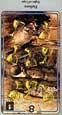
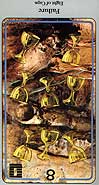 | The top left card represents the first possible outcome. Eight of Cups (Failure), when reversed: Hidden joy. New happiness. Positive change. |
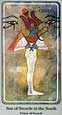
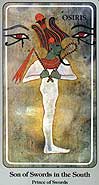 | The top right card represents the second possible outcome. Son of Swords (Osiris): Someone gentle, yet persuasive. An initiate to esoteric mysteries. Kindness. |
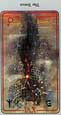
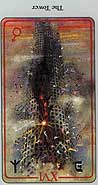 | The middle left card represents the force drawing you towards the first possible outcome. The Tower, when reversed: Similar to upright meanings, but less severe. A shaking up. Minor disturbance. |
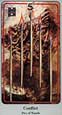
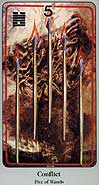 | The middle right card represents the force drawing you towards the second possible outcome. Five of Wands (Conflict): Strife and battle, without hatred and bitterness. Avoidance. |
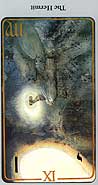 | The bottom card represents the critical factor that decides what will come to pass. The Hermit, when reversed: Involvement with others. Fear of loneliness. Disturbing dreams. A desire not to grow up. |