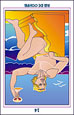
Today's Tarot for John Cleese
| The Cross and Triangle spread is a powerful means of understanding complex situations, developed by the Hermetic Order of the Golden Dawn. This spread is rich in occult and mystical symbolism, and one of our favorites here at Facade. The Phoenix Tarot is one of the most strikingly beautiful decks of the 20th century. Through vibrant colors and stylized images, it breathes new life into the familiar symbology of the Tarot. If you would like your own copy of the Phoenix Tarot, you can buy it now! |
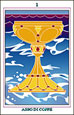
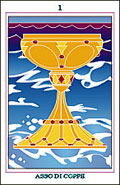 | The first card, the significator, is placed in the center of the cross. This card represents the prime energy manifest in your life. Ace of Cups: The seed of a new relationship or spiritual journey - perhaps as yet unseen. An opportunity for joy, contentment, fertility, or enlightenment. Coming to understand the emotional needs of those around you. May represent an unexpected message, a chance meeting, or the start of a friendship or romance. |
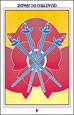
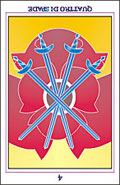 | The second card, placed above the significator, represents Air. It describes your spirit, process of thought, and the influence of reason. Four of Swords (Truce), when reversed: Restlessness and mental disharmony. Deserting a struggle in progress. A temporary retreat from stress that turns into a permanent rout. A lack of vigilance that could lead to disaster. |
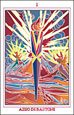
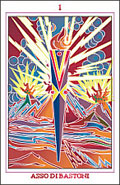 | The third card, placed to the right of the significator, represents Fire. It describes your motivations, creative energies, and the influence of passion. Ace of Wands: The seed of a new venture - perhaps as yet unseen. An opportunity to be met with boldness, vigor, and enthusiasm. The herald of birth, invention, or entrepreneurship. An innate and primal force released. May suggest a surge of vitality, creativity, or fertility that can set things in motion. |
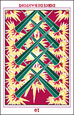
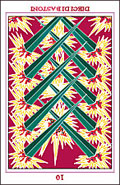 | The fourth card, placed below the significator, represents Water. It describes your emotions, meditations, and the influence of love. Ten of Wands (Oppression), when reversed: Refusing to take on burdens greater than you can carry. Noble leadership restrained from transforming into tyranny. Bearing the weight of ultimate responsibility without being crushed. Through careful conservation of their fuel, the engines of creation continue onward. |
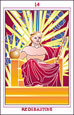
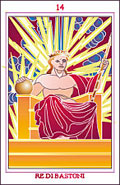 | The fifth card, placed to the left of the significator represents Earth. It describes your physical presence, position in life, and the influence of the material world. King of Wands: The essence of fire behaving as air, such as lightning: A great and daring leader who inspires others to rise to challenges alongside him. An artist who can take hold of an idea and make it a reality through bold action. One who is forceful, charismatic, and honest, leading by example, but unafraid to invest authority in others. A dashing and magnetic personality, carrying authority naturally, and striking at the world with swiftness and grace. |
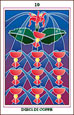
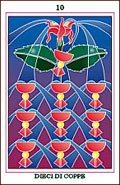 | At this point the cross is complete and the triangle is formed. The sixth card, placed on the bottom left of the triangle represents one of two opposing forces. Ten of Cups (Satiety): Fulfillment and joy in life and love. Feeling peace, tranquility, and contentment in friends and family. Taking delight in one's good fortune. |
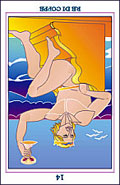 | The seventh card, placed on the bottom right of the triangle represents the force that opposes the bottom left card. These forces may be external, but they are frequently one's own inner archetypes in conflict. King of Cups, when reversed: The dark essence of water behaving as air, such as rain clouds in a gray sky: A pillar of maturity and patience, hiding a deep insecurity and an indecisive nature. One who secretly lusts for power, but lacks the courage, intellect, or work ethic necessary to take it. A charming seducer who appears innocent and understanding, but is in fact selfish and unfaithful. |
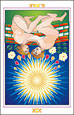
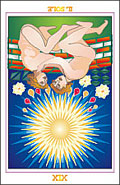 | The eighth card, the reconciler, is placed below the cross in the third vertex of the triangle. This is the force that will resolve the conflict between the bottom left and bottom right cards. By meditating on this force and bringing more of it into your life, you can bring the matter at hand to a swifter conclusion than would naturally occur. The Sun, when reversed: Loneliness and uncertainty. Nostalgic memories. The warm passing glow of dusk. Peace without vigilance. |
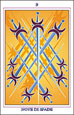
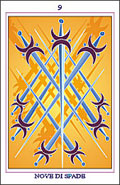 | The ninth and final card, placed in the center bottom of the triangle, represents the final outcome unless you change course. Nine of Swords (Cruelty): Debilitating mental anguish or ill health. Being dragged down by the dishonor of others. Participation in a shameful or regrettable act. Inescapable guilt, mistrust, and doubt. May indicate a death or other catastrophic loss. |
|
|