Today's Tarot for Kobe Bryant
| The Celtic Cross spread is one of the most popular Tarot spreads, providing varied insight into many aspects of a complex situation and your role in it. The International Icon Tarot renders traditional occult symbolism in Swiss iconography. It is a humorous and direct approach to divination, and one of our favorite new decks. If you would like your own copy of the International Icon Tarot, you can buy it now!
|
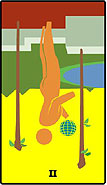 | The card not shown but at the center of the cross, represents the atmosphere surrounding the central issue. Two of Wands (Dominion), when reversed: The erosion of power and influence. Failing to articulate goals or establish a vision for the future. Being caught off guard, due to an inability to come to grips with the impact of past decisions. Obstinate and irresponsible leadership. Loss of interest, clarity, or faith in a venture. |
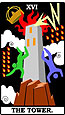
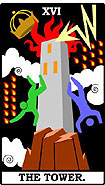 | The card visible at the center of the cross represents the obstacle that stands in your way - it may even be something that sounds good but is not actually to your benefit. The Tower: Unforeseen catastrophe. An abrupt change, perhaps leading to a new lifestyle and enlightenment. May indicate a broken relationship, divorce, or failure in business or career. |
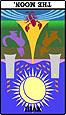
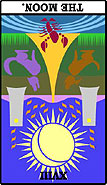 | The card at the top of the cross represents your goal, or the best you can achieve without a dramatic change of priorities. The Moon, when reversed: Clarity, control and peace in troublesome times. Increased psychic abilities. Temptations, small problems and minor setbacks overcome. The dawning of a new day. |
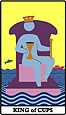
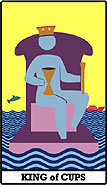 | The card at the bottom of the cross represents the foundation on which the situation is based. King of Cups: The essence of water behaving as air, such as a billowing cloud in the blue sky: Great maturity, endless patience, tolerance of other points of view, and a deep knowledge of human nature. One who intuitively knows the strengths of those around him, and gently cultivates them. Remaining calm and relaxed in all situations, and making artful use of diplomacy or a quiet word to resolve conflicts. The ability to listen to what another person is saying, and truly understand what is in their heart. A rewarding partner and a beloved leader. |
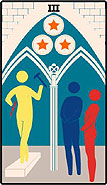 | The card at the left of the cross represents a passing influence or something to be released. Three of Pentacles (Works): The commencement of business, commercial transactions, or employment. The constructive use of creative talents, and the expression of artistry in workmanship. Skill and labor turned to the crafting of things of value. Using the conventional as a medium for expressing the exceptional, in order to build something of great renown and glory. |
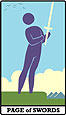
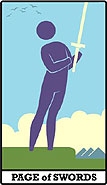 | The card at the right of the cross represents an approaching influence or something to be embraced. Page of Swords: The essence of air behaving as earth, such as a steady wind: The approach of an unexpected challenge, to be met with clear thought and just action. A person filled with an eager appetite for all matters of mind and logic. The gathering of information through unfaltering vigilance, careful examination, and subtle spycraft. The use of reason or eloquent speech to penetrate the veil of confusion and cut to the heart of the matter. |
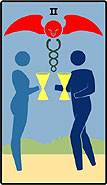 | The card at the base of the staff represents your role or attitude. Two of Cups (Love): The perfect harmony of union, in romance, friendship, or business. A deep and palpable connection radiating joy and contentment. A great concordance or pledge of fidelity. The joining of male and female interpreted in the broadest sense. The sanctification of the natural through that which exists on a higher plane. May indicate the meeting of a kindred soul, marriage, engagement, merger, or partnership. |
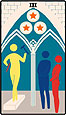
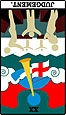
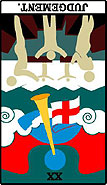 | The card second from the bottom of the staff represents your environment and the people you are interacting with. Judgement, when reversed: Procrastination and indecision. Disillusionment and the inability bring a matter to conclusion. |
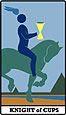
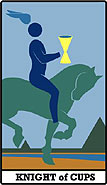 | The card second from the top of the staff represents your hopes, fears, or an unexpected element that will come into play. Knight of Cups: The essence of water behaving as fire, such as a rushing river: A passionate romantic, full of charm and beauty, but prone to extremes. Forceful idealism blended with gentle kindness. An eager and intense person, forward with their emotions and tender in their support of others. |
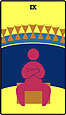
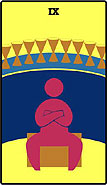 | The card at the top of the staff represents the ultimate outcome should you continue on this course. Nine of Cups (Happiness): Contentment and satisfaction in romance, friendship, or other relationships. Achieving your deepest desires and savoring beauty and sensual pleasures. A state of joy and abundance radiating fulfillment and bliss. |
|
|