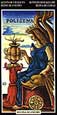
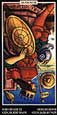
| The Celtic Cross spread is one of the most popular Tarot spreads, providing varied insight into many aspects of a complex situation and your role in it. The Sola Busca Tarot is a color embellished reproduction of the only known extant 15th century Tarot deck engraved on metal. It is the choice of purists and those seeking a direct channel with the dawn of Western occultism. |
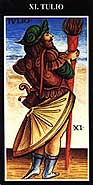 | The card not shown but at the center of the cross, represents the atmosphere surrounding the central issue. Tulio (Strength): Raw power. Health and physical fortitude. A surge of tremendous force. Recovery from sickness. Victory after apprehension and fear. The ability to face and overcome opposition brings the inner qualities of strength and forbearance. Delays and setbacks will be overcome. |
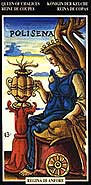 | The card visible at the center of the cross represents the obstacle that stands in your way - it may even be something that sounds good but is not actually to your benefit. Regina di Anfore (Queen of Cups): The essence of water, such as a deep and placid lake: Spirituality, maturity, and grace. A natural counselor and healer, One whose relaxed presence seems to embody deep love and spirituality. A tranquil poet who reflects the nature of the observer. The embrace of all things dreamlike and receptive, such as perfect and unconditional love. |
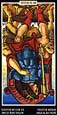
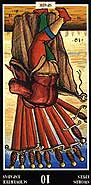 | The card at the top of the cross represents your goal, or the best you can achieve without a dramatic change of priorities. 10 Spade (Ruin), when reversed: The darkness before the dawn. An end to suffering, leading to spiritual transformation. A crushing and seemingly total defeat that hides within it the seeds of final victory. Ultimate knowledge gained through ultimate sacrifice. |
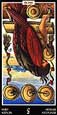
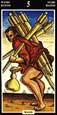
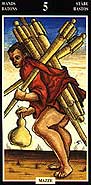 | The card at the bottom of the cross represents the foundation on which the situation is based. 5 Mazze (Strife): An intense struggle motivated purely by the love of competition. A state of seeming chaos driven by endless small disputes and complications. A hotly contested race, debate, game, or other challenge. A stressful situation that brings out the best in the participants. |
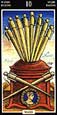
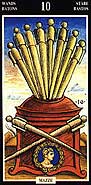 | The card at the left of the cross represents a passing influence or something to be released. 10 Mazze (Oppression): Success and gain, leading you to take on a burden greater than you can carry. Noble leadership transformed, through lack of restraint, into tyranny. The crushing weight of ultimate responsibility. Having spent their fuel, the engines of creation grind to a halt. |
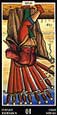
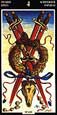
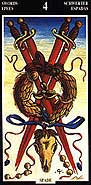 | The card at the right of the cross represents an approaching influence or something to be embraced. 4 Spade (Truce): A time of tranquility and intellectual repose in the midst of a great struggle. A temporary retreat from stress to regather inner strength, reaffirm convictions, reorganize thoughts, and formulate a new plan. The need for vigilance in a moment of calm. May suggest a withdrawal from the material world to find spiritual guidance. |
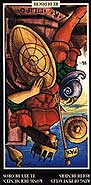 | The card at the base of the staff represents your role or attitude. Re di Dischi (King of Discs), when reversed: The dark essence of earth behaving as air, such as a diamond: An unyielding businessman, with a gift for identifying weakness and exploiting it for personal gain. One well informed about material affairs, but ignorant of larger, more pressing issues. A blind devotee of business as usual, unconcerned with the unintended results, and contemptuous of new ideas. A person full of greed and avarice, easily corrupted by luxury or the temptations of the flesh. |
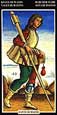
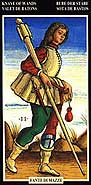 | The card second from the bottom of the staff represents your environment and the people you are interacting with. Fante di Mazze (Page of Wands): The essence of fire behaving as earth, such as wood or coal: The surprising appearance of a new passion. An adventurer who blazes through life, acting as a catalyst that others may harness. The intense enthusiasm and childlike imagination that fuels any new venture, needing only the application of mind and material to make it a success. Inner fire that can drive away fear and replace it with fury. Can represent a person of some timidity, but whose innate passion can be easily ignited. May indicate the birth of a child. |
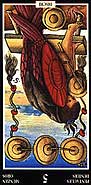 | The card second from the top of the staff represents your hopes, fears, or an unexpected element that will come into play. 5 Dischi (Worry), when reversed: Concern over finance leads to prudent action. Impending physical threat is met with calm and skill. Suffering and loneliness leads to spiritual growth. Stress is met without resorting to excess or the pursuit of oblivion. |
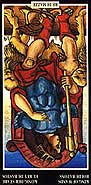 | The card at the top of the staff represents the ultimate outcome should you continue on this course. Re di Mazze (King of Wands), when reversed: The dark essence of fire behaving as air, such as lightning: An exciting and reckless leader who inspires others to irresponsible acts. An artist whose depraved love of chaos causes him to take hold of destructive ideas and make them appealing to the masses. One who is charismatic and intimidating, using demonstrations of his own skill to dupe others into accepting responsibilities beyond their ability. A dashing and magnetic personality, appearing and disappearing with great suddenness, and leaving upheaval in his wake. |