Today's Tarot for Ludwig Wittgenstein
| The Relationship spread provides insight into the interaction between two people or entities. It is the spread of choice for questions about partnerships, be they in romance or business. The Phoenix Tarot is one of the most strikingly beautiful decks of the 20th century. Through vibrant colors and stylized images, it breathes new life into the familiar symbology of the Tarot. If you would like your own copy of the Phoenix Tarot, you can buy it now! |
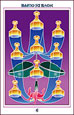
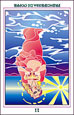
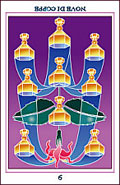 | The card at the top left represents how you see yourself. Nine of Cups (Happiness), when reversed: Vanity, conceit, and smugness in romance, friendship, or other relationships. Achieving what you always thought you wanted. Overindulging in food, drink, or the pleasures of the flesh. A state of joy and abundance that is shallow and fleeting. |
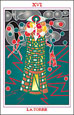
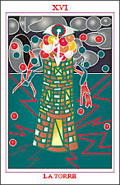 | The card at the top right represents how you see your partner. The Tower: Unforeseen catastrophe. An abrupt change, perhaps leading to a new lifestyle and enlightenment. May indicate a broken relationship, divorce, or failure in business or career. |
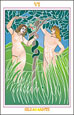
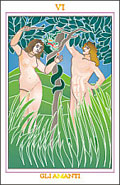 | The card in the center left represents how you feel about your partner. The Lovers: A caring and trusting relationship. Beauty and inner harmony. A decision calling for emotional control and faithfulness to spiritual values. |
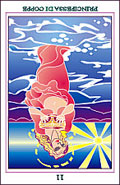 | The card in the center right represents what stands between you and your partner. Page of Cups, when reversed: The dark essence of water behaving as earth, such as a wellspring: An unexpected new relationship that is childish and foolish. An idle dreamer oblivious to the realities of the world. Moodiness, sad reflection, and retreat from society. Seduction and deception in personal and business relationships. |
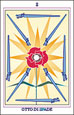
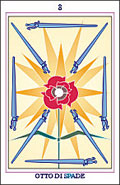 | The card in the lower left represents how your partner sees you. Eight of Swords (Interference): Chagrin at the unforeseen consequences of prior decisions. Criticism, censure, and the imposition of external restrictions. Confusion leading to powerlessness. Inability to focus on the crux of a problem and free oneself from a difficult situation. Being hamstrung by a past failure or humiliation. |
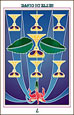
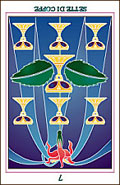 | The card in the lower right represents what your partner feels about you. Seven of Cups (Temptation), when reversed: Daydreams and fantasies brought into realistic focus. The contemplation of many options leading to a conclusive choice. Inner clarity that dissipates illusions and false choices. Remaining connected to reality in the face of intoxication, delirium, or hallucination. Under rare and extreme circumstances, may indicate the failure to recognize a transcendental spiritual truth. |
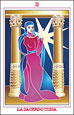
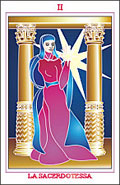 | The card in the center represents the present status or challenge of the relationship. The High Priestess: A pure, exalted and gracious influence. Education, knowledge, wisdom, and esoteric teachings. The forces of nature. Intuition, foresight, and spiritual revelation of the most mysterious and arcane sort. |
|
|