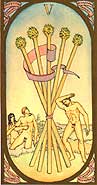
| The Celtic Cross spread is one of the most popular Tarot spreads, providing varied insight into many aspects of a complex situation and your role in it. The Marseilles Tarot is an 18th century creation of obscure origins. It predates the occult symbolism of the Rider Waite deck by roughly 200 years, giving the readings a unique and rustic flavor. Many swear by this deck as the true oracle of the common man. If you would like your own copy of the Marseilles Tarot, you can buy it now! |
 | The card not shown but at the center of the cross, represents the atmosphere surrounding the central issue. Roy de Coupe (King of Cups), when reversed: The dark essence of water behaving as air, such as rain clouds in a gray sky: A pillar of maturity and patience, hiding a deep insecurity and an indecisive nature. One who secretly lusts for power, but lacks the courage, intellect, or work ethic necessary to take it. A charming seducer who appears innocent and understanding, but is in fact selfish and unfaithful. |
 | The card visible at the center of the cross represents the obstacle that stands in your way - it may even be something that sounds good but is not actually to your benefit. Valet de Coupe (Page of Cups): The essence of water behaving as earth, such as a wellspring: An unexpected new relationship that is playful and spontaneous. A romantic soul who embraces compassion and imagination with childlike joy. Gentle reflections on love, spirituality, and the importance of personal relationships in business and material affairs. May herald the birth of a child. |
 | The card at the top of the cross represents your goal, or the best you can achieve without a dramatic change of priorities. Le Pape (The Pope), when reversed: Authoritarianism. Inflexible and dogmatic thinking. A calcified old regime. Bad or incompetent advice. Inability to hear a higher or inner voice, or pretending to hear it for personal gain. |
 | The card at the bottom of the cross represents the foundation on which the situation is based. Eight of Batons (Swiftness), when reversed: Too much force applied too suddenly. A flash in the pan. A foolhardy and untimely plunge into the unknown. Impatience leading to poor decisions in love, business, travel, or spiritual growth. |
 | The card at the left of the cross represents a passing influence or something to be released. Four of Swords (Truce), when reversed: Restlessness and mental disharmony. Deserting a struggle in progress. A temporary retreat from stress that turns into a permanent rout. A lack of vigilance that could lead to disaster. |
 | The card at the right of the cross represents an approaching influence or something to be embraced. Le Pendu (The Hanged Man), when reversed: Life in suspension. Selfish, materialistic, and untrusting attitudes. Unwillingness to make necessary sacrifices. Going along with the crowd, and refusing to hear the inner voice. Concessions and appeasements that backfire. |
 | The card at the base of the staff represents your role or attitude. Two of Swords (Peace), when reversed: Indecision due to contradictory characteristics brought together. Tension in the aftermath of a quarrel that has been resolved. Scheming, abuse of trust, and agreements made in bad faith. Allowing the mind to block off the emotions. Self deception as a means of justifying cruel acts. |
 | The card second from the bottom of the staff represents your environment and the people you are interacting with. La Maison Diev (The Tower): Unforeseen catastrophe. An abrupt change, perhaps leading to a new lifestyle and enlightenment. May indicate a broken relationship, divorce, or failure in business or career. |
 | The card second from the top of the staff represents your hopes, fears, or an unexpected element that will come into play. Nine of Cups (Happiness): Contentment and satisfaction in romance, friendship, or other relationships. Achieving your deepest desires and savoring beauty and sensual pleasures. A state of joy and abundance radiating fulfillment and bliss. |
 | The card at the top of the staff represents the ultimate outcome should you continue on this course. Nine of Coins (Gain), when reversed: Bad luck attending material affairs. Elitism and snobbishness. Lack of discipline resulting in the erosion of security and stability. Contempt for the exact labors that brought one to a position of refinement. Dishonesty in financial matters. |