| The Celtic Cross spread is one of the most popular Tarot spreads, providing varied insight into many aspects of a complex situation and your role in it. The Renaissance Tarot is a modern deck, with symbolism drawn from the heroic age and rendered in renaissance style. This deck is an excellent choice for exploring questions of passion, mastery, and the inner workings of human reason. If you would like your own copy of the Renaissance Tarot, you can buy it now! |
 | The card not shown but at the center of the cross, represents the atmosphere surrounding the central issue. Knight of Coins: A responsible and hardworking young person, efficient and persevering. An organizer, cataloguer, and pathfinder. A person attached to the realities of life, but with a quixotic streak. A person who is serious yet quick to laugh. |
 | The card visible at the center of the cross represents the obstacle that stands in your way - it may even be something that sounds good but is not actually to your benefit. Nine of Swords (Cruelty), when reversed: Slander. Suspicion. |
 | The card at the top of the cross represents your goal, or the best you can achieve without a dramatic change of priorities. Four of Cups (Luxury), when reversed: New faith. New hope. A return to trust. |
 | The card at the bottom of the cross represents the foundation on which the situation is based. Ace of Coins: Prosperity. Security. Well-being. Material riches and spiritual richness. |
 | The card at the left of the cross represents a passing influence or something to be released. Four of Staves (Completion), when reversed: Preoccupations. Discord in relationships. |
 | The card at the right of the cross represents an approaching influence or something to be embraced. Eight of Cups (Indolence), when reversed: Awareness. Perseverance. Optimism. |
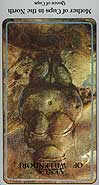
 | The card at the base of the staff represents your role or attitude. Queen of Cups, when reversed: A melodramatic scene stealer. A sentimental hypochondriac. A person prey to wild and shifting emotional fancies. |
 | The card second from the bottom of the staff represents your environment and the people you are interacting with. Three of Swords (Sorrow), when reversed: Balance of forces in conflict. Rest from struggle. |
 | The card second from the top of the staff represents your hopes, fears, or an unexpected element that will come into play. Six of Staves (Victory), when reversed: Fear of failure and fear of success. |
 | The card at the top of the staff represents the ultimate outcome should you continue on this course. Seven of Swords (Futility): Favorable turn of events. Hope for sustained success. Vigilance and strength. |