Today's Tarot for Niels Bohr
| The Fourfold Vision spread offers a progression of different ways of looking at an object, person, or situation. It is a powerful tool for gaining deeper insight into the specific subjects of other readings. The Sola Busca Tarot is a color embellished reproduction of the only known extant 15th century Tarot deck engraved on metal. It is the choice of purists and those seeking a direct channel with the dawn of Western occultism. |
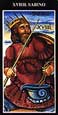
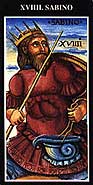 | The card on the far right represents the object being viewed, be it an idea, relationship, or the self. Sabino (The Sun): A time of contentment and freedom from restraints. Creative inspiration. Achievement, success, and warmth. Light and love in personal or business matters. Happiness and faithfulness in a relationship. |
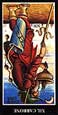
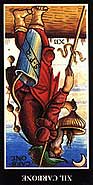 | The card second from the right represents the physical vision: how the object is seen at a base or mechanical level. Carbone (The Hanged Man), when reversed: Life in suspension. Selfish, materialistic, and untrusting attitudes. Unwillingness to make necessary sacrifices. Going along with the crowd, and refusing to hear the inner voice. Concessions and appeasements that backfire. |
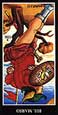
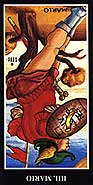 | The card in the middle represents the mental vision: the object personified and seen through a humanized perspective. Mario (The Emperor), when reversed: Weakness in character leading to tyranny and abuse of worldly power. Loss of confidence and ambition, coupled with the cold execution of the unthinkable. The inability to carry out plans or command respect. Being unreasonable and prone to fits of rage. A deceiver or demagogue. |
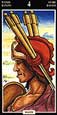
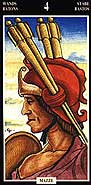 | The card second from the left represents the emotional vision: how passions and values are creatively stimulated by the mental vision. 4 Mazze (Completion): A chance to rest and rejoice, having successfully resolved a matter of great import. The initial success of a business venture or creative project. The blossoming of a friendship or romantic relationship. Conclusions drawn based on hard won experience. Spiritual, material, or emotional rewards for diligent effort. May suggest marriage, childbirth, or a victory celebration. |
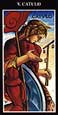
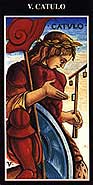 | The card on the far left represents the fourfold or mystical vision: still viewing through the previous three, we now add a spiritual element, revealing unseen aspects of the object. Catulo (The Hierophant): Faith in tradition and the old school. A justified and ancient source of power. Being supportive, sympathetic and loyal. Receiving instructions, learning, guidance or inspiration. The ability to hear a higher or inner voice. May also indicate a religious ritual, such as a marriage or an initiation. |
|
|