Today's Tarot for Nikola Tesla
| The Cross and Triangle spread is a powerful means of understanding complex situations, developed by the Hermetic Order of the Golden Dawn. This spread is rich in occult and mystical symbolism, and one of our favorites here at Facade. The Golden Tarot is a modern celebration of late medieval artwork. This deck is the choice of scholars, for it evokes images of elegance amid barbarism, and the light of virtue in dark times. If you would like your own copy of the Golden Tarot, you can buy it now! |
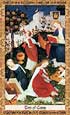
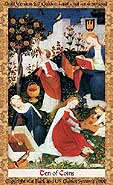 | The first card, the significator, is placed in the center of the cross. This card represents the prime energy manifest in your life. Ten of Coins (Wealth): Completion of material prosperity and riches. Freedom from financial anxiety, the security of home, and the enjoyment of family. The passing of inheritance along to children, or the gaining of inheritance from parents. |
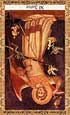
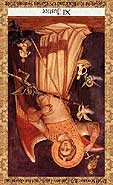 | The second card, placed above the significator, represents Air. It describes your spirit, process of thought, and the influence of reason. Justice, when reversed: Lack of balance, harmony and integrity. The suspension of action until a decision is made. Lawsuits and prosecutions. Unjust decisions and the consequences of those decisions. A turn for the worse in legal matters. |
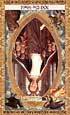
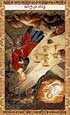
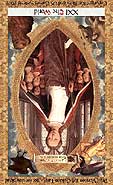 | The third card, placed to the right of the significator, represents Fire. It describes your motivations, creative energies, and the influence of passion. The World, when reversed: Incompleteness and shoddy design. A great work betrayed. Insecurity, fear of change, and the failure to reach goals. Regret and disappointment. |
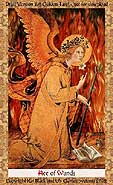 | The fourth card, placed below the significator, represents Water. It describes your emotions, meditations, and the influence of love. Ace of Wands: The seed of a new venture - perhaps as yet unseen. An opportunity to be met with boldness, vigor, and enthusiasm. The herald of birth, invention, or entrepreneurship. An innate and primal force released. May suggest a surge of vitality, creativity, or fertility that can set things in motion. |
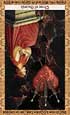
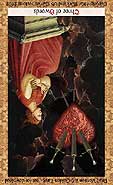 | The fifth card, placed to the left of the significator represents Earth. It describes your physical presence, position in life, and the influence of the material world. Three of Swords (Sorrow), when reversed: Unsettling news that helps you to distance yourself from a destructive relationship. Painfully honest communication that needs to take place. Not letting yourself be dragged by your emotions into a negative situation. A trust or confidence betrayed in an attempt to help someone in need. The revelation of a painful truth. |
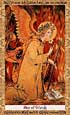
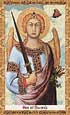
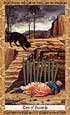
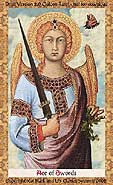 | At this point the cross is complete and the triangle is formed. The sixth card, placed on the bottom left of the triangle represents one of two opposing forces. Ace of Swords: The seed of victory - perhaps as yet unseen. A challenge to be met and solved through the invocation of force. An opportunity to bring reason and intelligence to bear in the pursuit of justice and truth. An excessive power that must not be abused. May suggest new ideas or information that can reveal a solution to the problem at hand. |
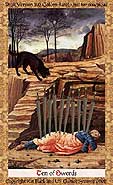 | The seventh card, placed on the bottom right of the triangle represents the force that opposes the bottom left card. These forces may be external, but they are frequently one's own inner archetypes in conflict. Ten of Swords (Ruin): Crushing defeat brought about by idle intellectualism divorced from reality. Sadness and desolation in the aftermath of a catastrophic and total collapse. A decisive conclusion brought about through the swift and merciless application of overwhelming force. |
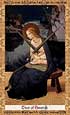
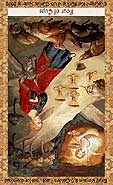 | The eighth card, the reconciler, is placed below the cross in the third vertex of the triangle. This is the force that will resolve the conflict between the bottom left and bottom right cards. By meditating on this force and bringing more of it into your life, you can bring the matter at hand to a swifter conclusion than would naturally occur. Four of Cups (Luxury), when reversed: New and unusual relationships and opportunities. The reawakening of your appetite for life or love. The path of excess leading to spiritual rejuvenation and the appearance of novel ambitions. |
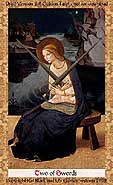 | The ninth and final card, placed in the center bottom of the triangle, represents the final outcome unless you change course. Two of Swords (Peace): Contradictory characteristics brought together as a means of resolving a conflict. Refusing to be ruled by negative emotions. Strife brought to a close through clarity of mind and restraint of force. Turning a blind eye to the minor infractions of others. |
|
|