Today's Tarot for Peter Jackson
| The Cross and Triangle spread is a powerful means of understanding complex situations, developed by the Hermetic Order of the Golden Dawn. This spread is rich in occult and mystical symbolism, and one of our favorites here at Facade. The Phoenix Tarot is one of the most strikingly beautiful decks of the 20th century. Through vibrant colors and stylized images, it breathes new life into the familiar symbology of the Tarot. If you would like your own copy of the Phoenix Tarot, you can buy it now! |
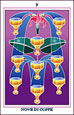
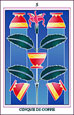
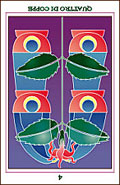 | The first card, the significator, is placed in the center of the cross. This card represents the prime energy manifest in your life. Four of Cups (Luxury), when reversed: New and unusual relationships and opportunities. The reawakening of your appetite for life or love. The path of excess leading to spiritual rejuvenation and the appearance of novel ambitions. |
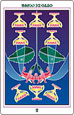
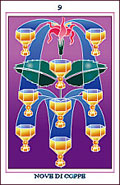 | The second card, placed above the significator, represents Air. It describes your spirit, process of thought, and the influence of reason. Nine of Cups (Happiness): Contentment and satisfaction in romance, friendship, or other relationships. Achieving your deepest desires and savoring beauty and sensual pleasures. A state of joy and abundance radiating fulfillment and bliss. |
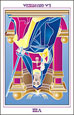
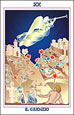
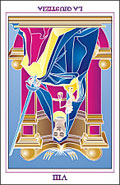 | The third card, placed to the right of the significator, represents Fire. It describes your motivations, creative energies, and the influence of passion. Justice, when reversed: Lack of balance, harmony and integrity. The suspension of action until a decision is made. Lawsuits and prosecutions. Unjust decisions and the consequences of those decisions. A turn for the worse in legal matters. |
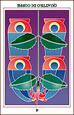
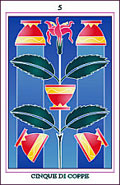 | The fourth card, placed below the significator, represents Water. It describes your emotions, meditations, and the influence of love. Five of Cups (Disappointment): Suffering a loss and wishing for what might have been. Being crippled by sadness, grief, and vain regret. Indecision brought on by the feeling that you made the wrong choice. Ignoring what you still have. May suggest a broken relationship or tragedy. May also suggest a gift, inheritance, opportunity, partnership, or marriage, but one that falls below expectations. |
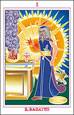
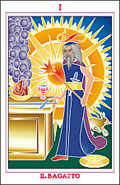 | The fifth card, placed to the left of the significator represents Earth. It describes your physical presence, position in life, and the influence of the material world. The Magician: Mastery over word, mind, and matter. The ability to turn ideas into actions, handle problems, and control one's life. The initiation of new projects, great works, or a new way of life. Eloquent and moving communication. Arcane and eldritch technologies. |
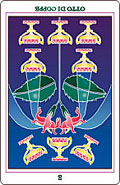 | At this point the cross is complete and the triangle is formed. The sixth card, placed on the bottom left of the triangle represents one of two opposing forces. Eight of Cups (Indolence), when reversed: The realization that a matter thought to be important was actually of little consequence. Moving on from something in which you had invested great love and devotion. The start of an inner journey to find higher aspects of life. Reflection on what is truly fulfilling in life. |
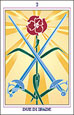
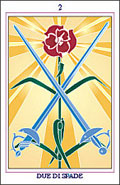 | The seventh card, placed on the bottom right of the triangle represents the force that opposes the bottom left card. These forces may be external, but they are frequently one's own inner archetypes in conflict. Two of Swords (Peace): Contradictory characteristics brought together as a means of resolving a conflict. Refusing to be ruled by negative emotions. Strife brought to a close through clarity of mind and restraint of force. Turning a blind eye to the minor infractions of others. |
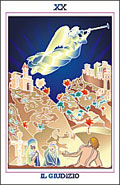 | The eighth card, the reconciler, is placed below the cross in the third vertex of the triangle. This is the force that will resolve the conflict between the bottom left and bottom right cards. By meditating on this force and bringing more of it into your life, you can bring the matter at hand to a swifter conclusion than would naturally occur. Judgement: A swift and conclusive decision. The resolution of a matter long unanswered. A change in point of view, most frequently towards greater enlightenment. Final balancing of karma. |
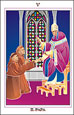
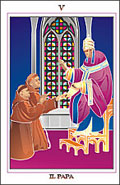 | The ninth and final card, placed in the center bottom of the triangle, represents the final outcome unless you change course. The Hierophant: Faith in tradition and the old school. A justified and ancient source of power. Being supportive, sympathetic and loyal. Receiving instructions, learning, guidance or inspiration. The ability to hear a higher or inner voice. May also indicate a religious ritual, such as a marriage or an initiation. |
|
|